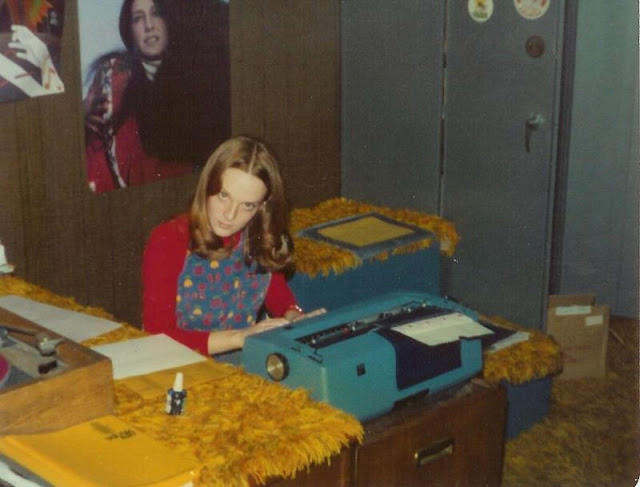
Warm indoor lighting and shaggy, textured surfaces frame a young woman seated at a desk, hands poised at a sturdy blue typewriter. Papers lie scattered within reach, and the machine’s blocky body and wide carriage hint at an era when “word processing” meant ink on paper and a confident rhythm of keystrokes. The candid look toward the camera makes the scene feel lived-in rather than staged, like a quick pause in the middle of real office work.
Across the room, metal storage cabinets and small office items create a practical backdrop, while a large poster on the wall adds a personal, almost youthful touch to the workspace. The mix of functional furniture and homey décor suggests how typing often happened in whatever space was available—school offices, back rooms, community centers, or improvised desks—where organization and concentration mattered more than polish. Details like the stacked boxes and neatly arranged surfaces underline the everyday routines surrounding this once-essential invention.
Ladies using typewriters appear again and again in historical photos because these machines reshaped education, employment, and communication, opening new pathways into clerical and administrative roles. Before laptops and smartphones, a typewriter could turn a quiet room into a production line for letters, reports, and records, each page demanding precision and patience. For readers exploring past inventions, images like this offer a tangible reminder of how technology lived in ordinary spaces—and how women were often at the center of that transformation.