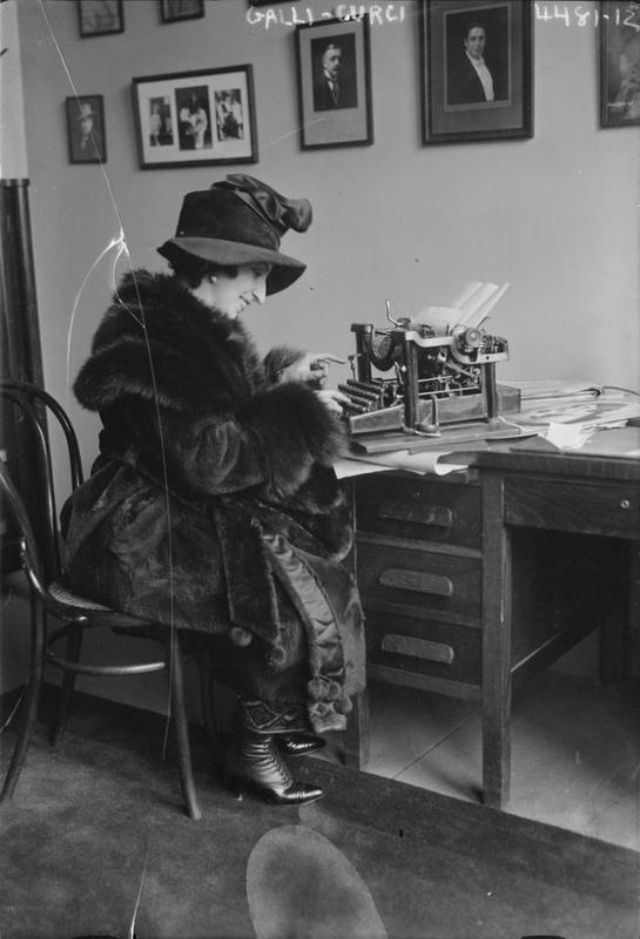
Seated at a sturdy office desk, a well-dressed woman leans into the work of a mechanical typewriter, her hands poised over the keys while papers and a book rest nearby. The room feels like an early clerical workspace—functional furniture, a simple chair, and framed portraits along the wall—yet her fashionable coat and hat hint at the era’s blending of modern professional life with formal dress. Details like the typewriter’s exposed mechanisms and the orderly drawers beneath the desktop underscore how “past inventions” were built to be seen, serviced, and used every day.
What makes images like this so compelling is the quiet story of changing labor: the typewriter turned handwriting into repeatable, legible text at speed, reshaping offices, journalism, and correspondence. Women became closely associated with this new technology, not as a novelty, but as skilled operators whose accuracy and pace kept businesses running. In that sense, the typewriter wasn’t only a machine—it was a doorway into paid work, training schools, and a growing culture of administrative expertise.
For readers searching historical photos of ladies using typewriters, this scene offers more than nostalgia; it provides texture to the history of communication and women’s work. The scuffs, the papers, and the concentrated posture suggest routine rather than ceremony, a glimpse of how invention settles into everyday life. As part of a broader look at early technology, this photograph invites us to imagine the clatter of keys and the steady rhythm of office hours that helped shape the modern written world.