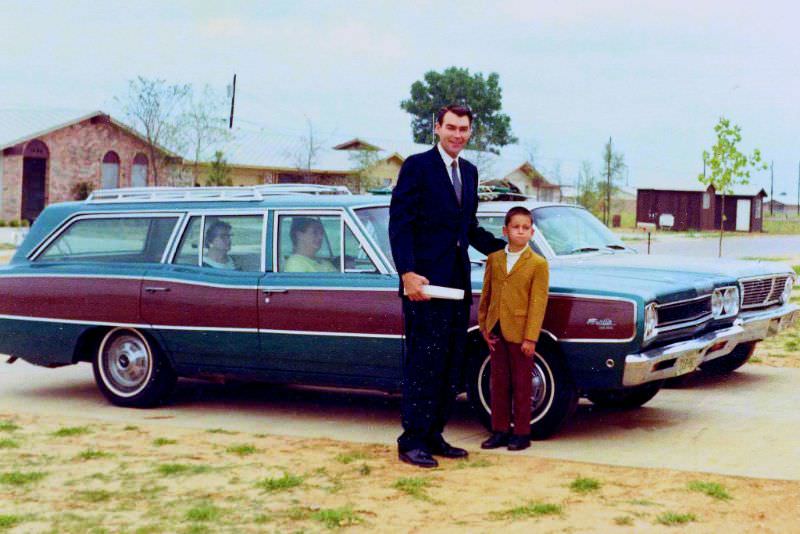
Long, low, and proudly practical, the station wagon in this scene wears its era on its chrome grille and broad side panels, with a roof rack ready for whatever the weekend demands. A suited father stands beside a well-dressed boy near the front fender, turning an everyday driveway moment into a small family milestone. Behind them, simple houses and open space hint at growing suburbs, the very places where wagons became the default answer to “How do we bring everyone—and everything—along?”
What made these family cars feel so modern was their blend of comfort and capacity: three rows when needed, a cargo area that swallowed groceries and luggage, and enough glass to keep every passenger connected to the road. Details like the long rear quarter window and the wagon’s extended roofline speak to an age when automakers treated utility as something you could also show off. It’s easy to imagine school drop-offs, church clothes, and summer trips sharing the same roomy interior, with the car itself acting as a rolling piece of domestic technology.
Station wagons sit at a fascinating crossroads in automotive history, bridging the gap between earlier sedans and the later rise of minivans and SUVs. Photos like this one remind us that “inventions” aren’t only gadgets; sometimes they’re designs that quietly reshape routines, making family mobility smoother and more ambitious. For anyone searching for cool vintage station wagon photos, classic family car memories, or the heyday of practical American motoring, this post celebrates the wagon’s enduring place in the story of the road.