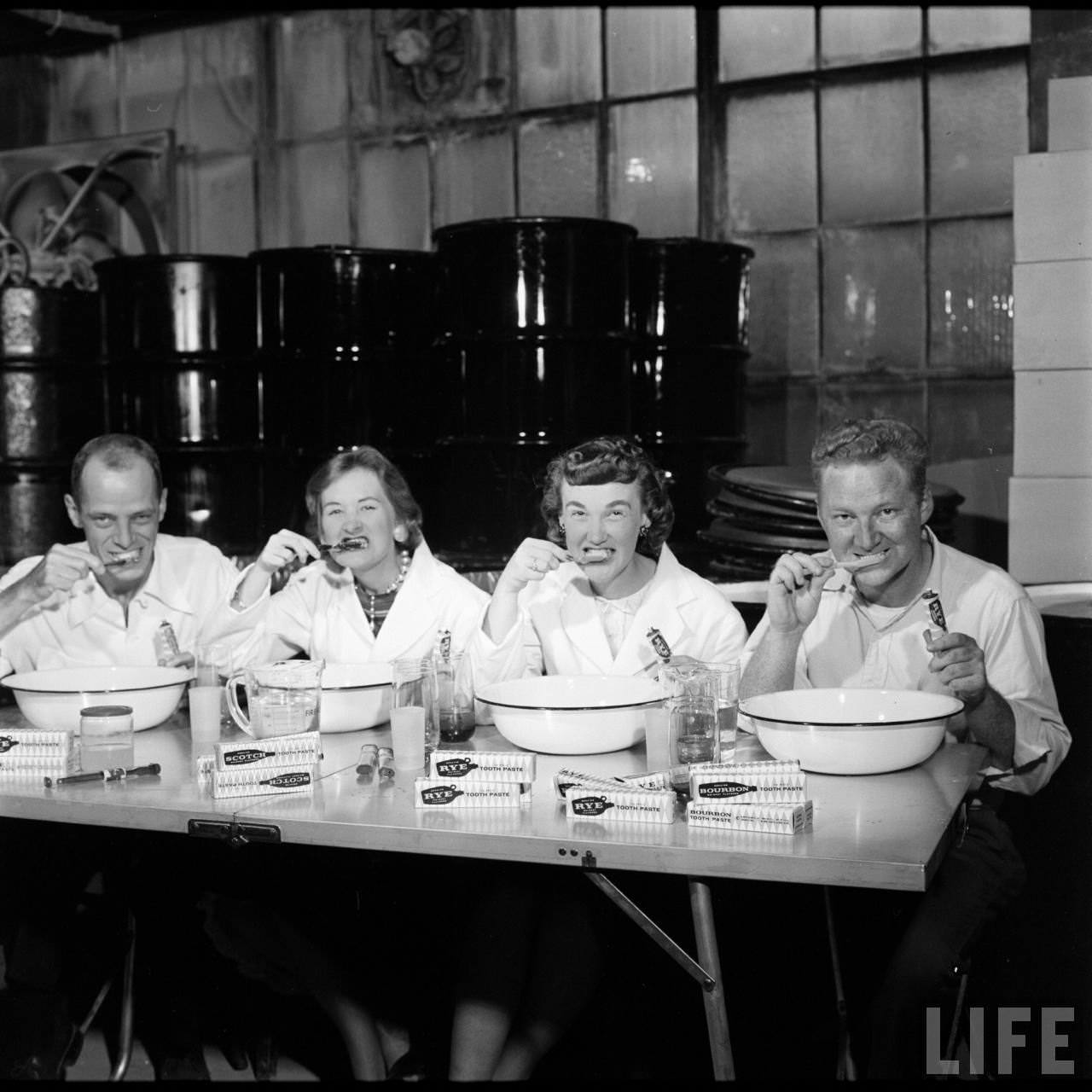
Four cheerful testers lean over enamel washbasins, toothbrushes raised mid-scrub, turning an everyday hygiene routine into a publicity stunt. The scene feels part laboratory, part break room, with measuring pitchers and water glasses lined up like props for a “serious” experiment. Behind them, a wall of industrial barrels and tall factory windows hints that this oddball dental trial is happening in a working production space rather than a neat bathroom at home.
On the table, product boxes spell out the gimmick: toothpaste branded with whiskey varieties—“Scotch,” “Rye,” and “Bourbon”—as if brushing your teeth could borrow the swagger of a cocktail menu. The employees’ grins suggest they’re in on the joke, performing for the camera while giving the flavor concept an enthusiastic, staged endorsement. It’s classic mid-century marketing theater, when novelty often passed for innovation and consumer curiosity was treated as a resource to be mined.
Ideas like whiskey flavored toothpaste sit comfortably among 1950s inventions and promotional experiments that promised modern convenience with a wink. For historians of advertising and pop culture, the photo offers a compact lesson in how companies tried to make ordinary products feel daring, masculine, or sophisticated—without changing the basic act of brushing. If you’re searching for retro marketing, strange inventions, and the weirder corners of dental history, this image delivers a perfect snapshot of the era’s boundless, occasionally ridiculous imagination.