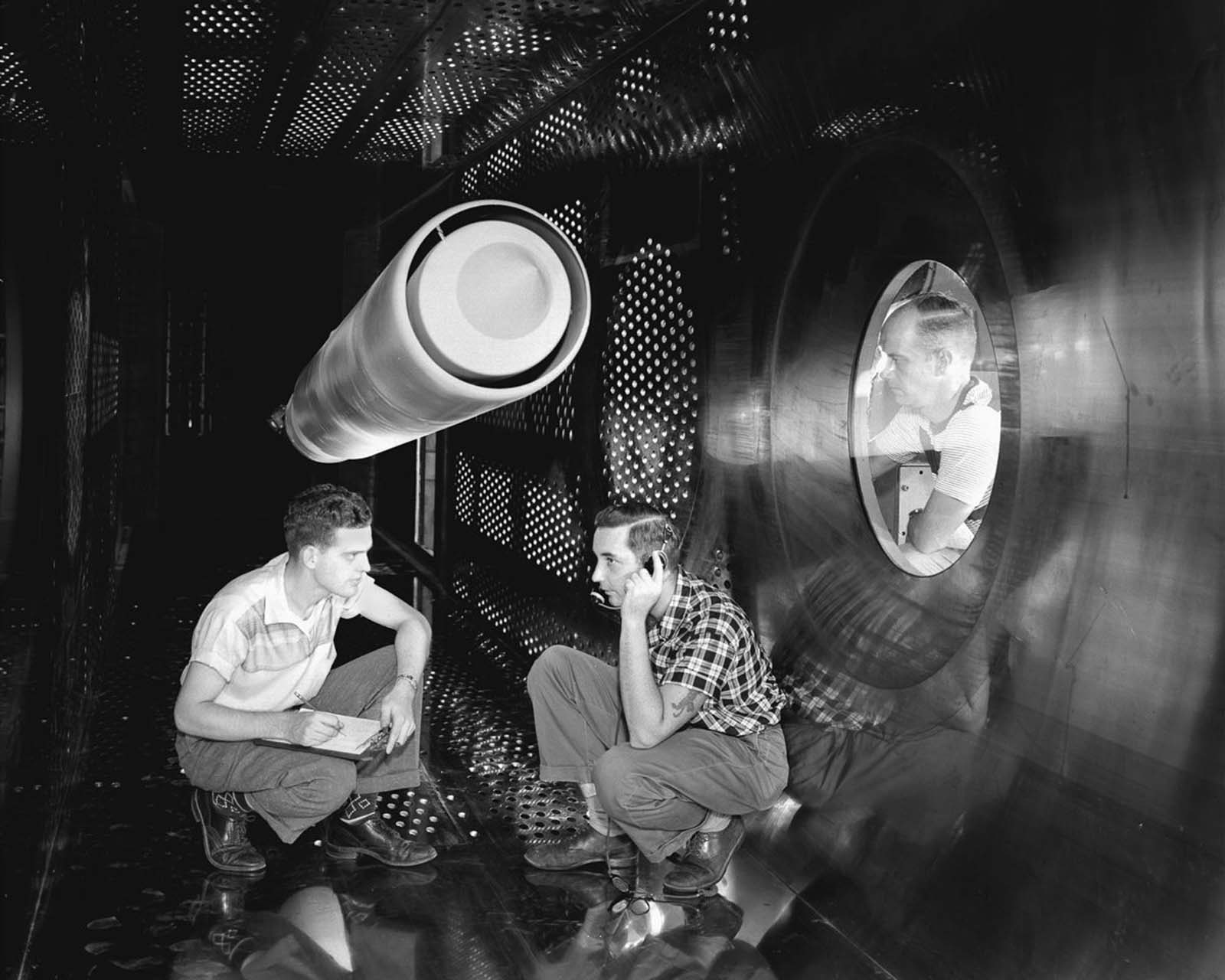
Inside the 8 x 6-foot supersonic wind tunnel test section, an ACN nozzle model hangs like a precision tool suspended in a cathedral of metal. The perforated wall panels and glossy floor surfaces give the space a patterned, almost futuristic texture, emphasizing that airflow here was engineered as carefully as any machine part. Dated 1957 in the title, the scene evokes the intense mid-century push to understand high-speed aerodynamics.
Two technicians crouch beneath the model, one with a notebook poised for measurements while the other listens closely on a handset, suggesting live coordination during a test run. Off to the right, a third man peers through a round porthole-like opening in the tunnel wall, watching the setup from within the thick, curved structure. The careful body language—focused, patient, and deliberate—captures the everyday craft behind supersonic research, where small adjustments could change pressure patterns and shock behavior.
For readers drawn to the history of inventions, this photograph offers a grounded look at how experimental hardware moved from concept to validated design. The ACN nozzle model, the test-section geometry, and the human scale of the engineers working around it all underline why wind tunnels remained essential tools in aviation and space-era development. As a WordPress feature image or archival post, it provides rich visual keywords—supersonic wind tunnel, nozzle model, aerodynamics testing, and 1950s engineering—while preserving the atmosphere of hands-on research.