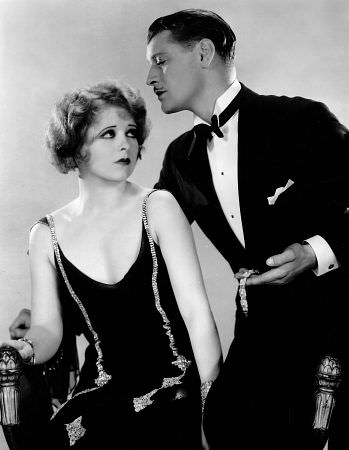
Glamour and unease share the frame as Clara Bow sits poised in a low-cut, beaded evening dress, her gaze turned sideways with a mix of curiosity and caution. The styling—soft curls, bold makeup, and shimmering trim—leans into the late-silent and early-talkie era’s fascination with modern women who could command attention without saying a word. Even in a simple studio setup, the mood feels charged, like a scene paused mid-conversation.
Behind her, a tuxedoed man leans in close, immaculate in formalwear and holding what looks like a string of pearls, an accessory that reads as both gift and symbol. The physical distance is small, yet the emotional space between them feels carefully staged: her posture grounded, his presence insistent. That tension fits the film’s title, “Her Wedding Night,” hinting at romance complicated by expectation, performance, and social pressure.
As a piece of classic Hollywood history, this still highlights why Clara Bow remained a defining face of the era—expressive, fashionable, and vividly contemporary for 1930. Fans of Movies & TV ephemera will recognize the careful lighting and theatrical posing typical of publicity photography, designed to sell a story in one glance. For collectors and film buffs, it’s a striking reminder of how early sound-era cinema packaged intimacy, glamour, and drama into a single unforgettable moment.