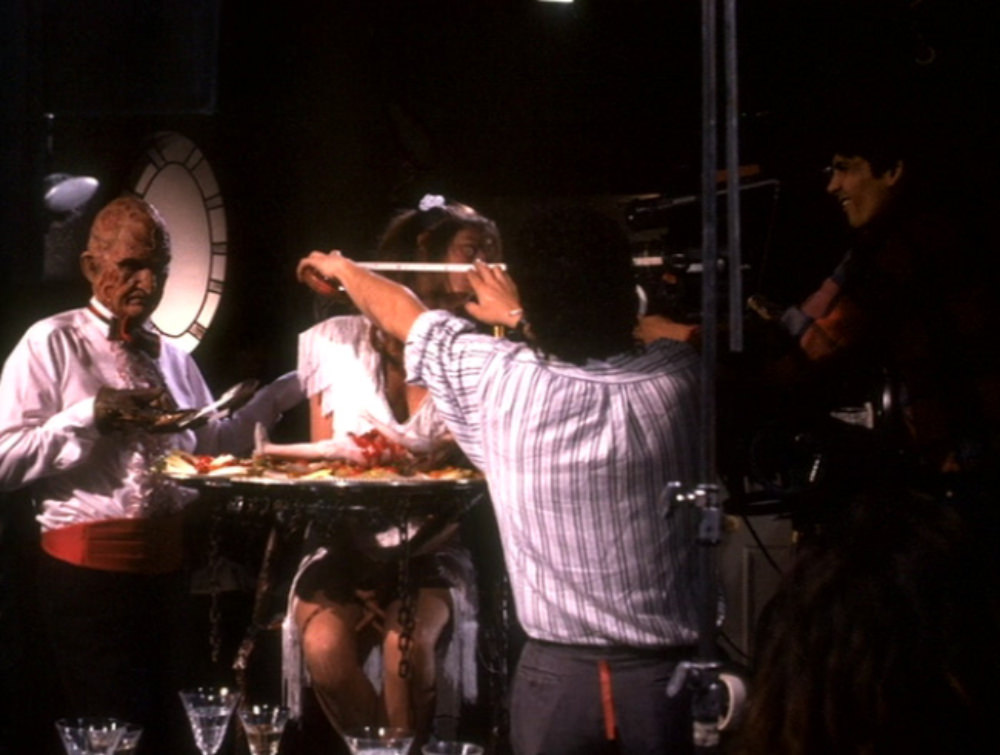
Under hot set lights, the illusion of nightmare is built piece by piece: a performer in heavy horror makeup sits at the edge of a messy table while crew members crowd in close, measuring, adjusting, and preparing the next take. The camera rig and stands at frame right underline how practical this moment is, even as the scene itself leans into the grotesque. It’s the kind of candid behind-the-scenes view that reminds fans how much craft sits just outside the final edit.
Rather than a polished publicity still, the photo feels like a working snapshot from the production floor of *A Nightmare on Elm Street 5: The Dream Child* (1989). You can almost sense the pause between takes—the concentration of technicians, the careful placement of props, and the unglamorous clutter that makes the on-screen chaos possible. In late-1980s horror filmmaking, effects, lighting, and timing had to align in-camera, and images like this preserve that hands-on problem-solving.
For collectors and movie-history readers, this is a small window into the practical effects era that defined the franchise’s look and texture. The mix of monster makeup, set dressing, and on-the-spot adjustments captures the rhythm of a horror set: meticulous planning punctuated by sudden, precise action. If you’re searching for behind-the-scenes photos from *A Nightmare on Elm Street 5: The Dream Child*, this production moment offers an authentic glimpse of Movies & TV craftsmanship at work.