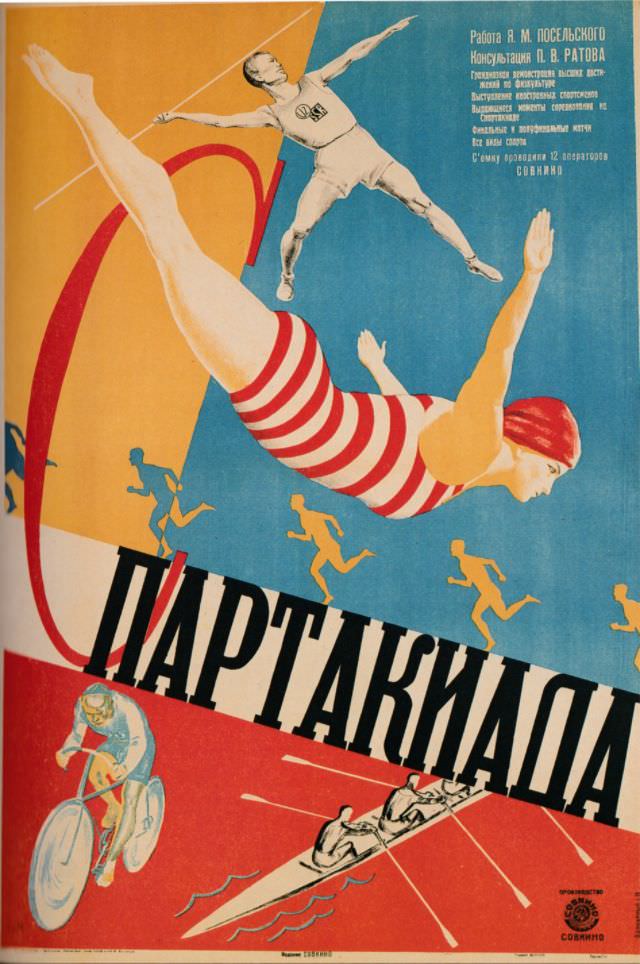
A rush of athletic motion fills this 1927 poster for “Spartakiad,” directed by Joseph Poselsky, where bold blocks of blue, red, and ochre frame bodies in mid-flight and mid-stride. A diver in striped swimwear cuts diagonally across the composition, echoed by a javelin thrower above and a string of runners marching along the horizon line. The large Cyrillic title anchors the design, while smaller Russian text and a studio mark hint at its original film-promotion purpose.
Posters like this were built to sell speed, strength, and spectacle at a glance, and the graphic language here does exactly that—clean contours, exaggerated angles, and a dynamic layout that makes the eye sprint from one sport to the next. Cycling and rowing appear in the lower portion, expanding the theme from a single event into a panorama of modern physical culture. Even without reading every line, the message is unmistakable: sport as theater, and athletic discipline as a modern ideal.
For collectors of Soviet-era cinema and historians of design, “Spartakiad” offers a vivid example of late-1920s visual propaganda and early movie marketing rolled into one. The poster’s stylized athletes and geometric energy make it a standout piece for anyone researching Spartakiad imagery, Russian film posters, or the intersection of sports and screen culture. As a WordPress feature image, it brings instant period atmosphere—part art, part advertisement, and part time capsule of an era that celebrated the body in motion.