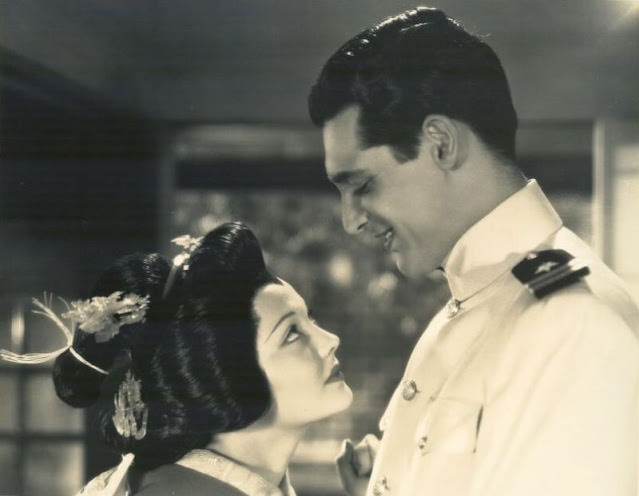
A quiet, intimate moment anchors this promotional still from the 1932 screen version of “Madame Butterfly,” where Sylvia Sidney’s poised, upward gaze meets the smile of a uniformed naval officer. The contrast between her carefully styled hair ornaments and his crisp military attire sets the scene in a way classic pre-Code Hollywood loved: romance framed by ritual, rank, and the promise of permanence.
Sidney’s presence reads as both tender and watchful, suggesting a performance built on emotional restraint rather than grand gesture. Even in a single frame, the staging hints at the story’s central tension—private devotion pressed against public duty—while the soft lighting and close composition keep attention locked on the actors’ expressions.
For film history fans and classic cinema collectors, this “Madame Butterfly” 1932 image offers a window into early 1930s movie storytelling, costume design, and studio-era portrait craft. It’s the kind of Hollywood memorabilia that sparks conversation about adaptation, star power, and how Sylvia Sidney helped shape screen drama in an era when a glance could carry the weight of an entire scene.