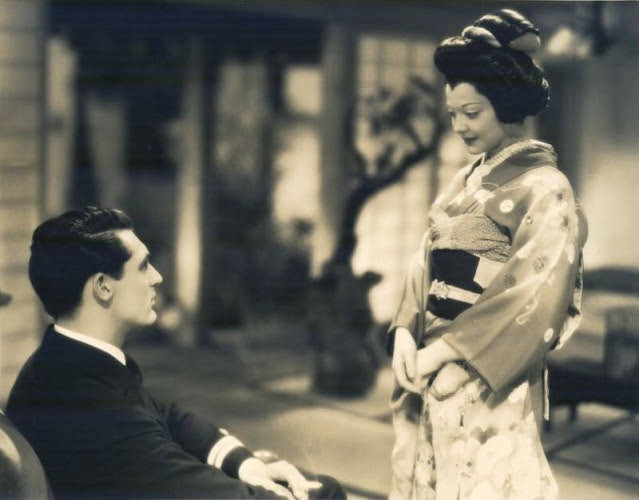
Sylvia Sidney’s screen presence in “Madame Butterfly” (1932) is often remembered for how much emotion she could convey with stillness alone, and the promotional imagery around the film leans into that quiet intensity. Here, a seated man in a dark suit looks up toward a woman in a patterned kimono, her hair styled high and precise, creating an immediate visual contrast between Western tailoring and Japanese dress. The soft focus and studio lighting add a gentle, theatrical haze that feels unmistakably early-1930s Hollywood.
Rather than relying on grand spectacle, the scene suggests a private conversation—one weighted by expectation, devotion, and unease. The woman’s downcast gaze and composed posture read as controlled restraint, while the man’s attentive angle and fixed look implies a plea or promise that may not hold. Even without dialogue, the staging hints at the larger themes that made “Madame Butterfly” a perennial story for stage and screen: love framed by cultural boundaries and the fragile costs of longing.
For readers browsing classic cinema and Movies & TV history, this historical photo offers a vivid entry point into how studios sold drama in the pre-Code era—through mood, costume, and intimate tension. It also reflects the period’s fascination with “Madame Butterfly” as a narrative source, where visual signifiers carried as much storytelling weight as the script. If you’re exploring Sylvia Sidney’s filmography or collecting 1932 movie memorabilia, this image is a compelling snapshot of Hollywood’s romantic imagination at the time.