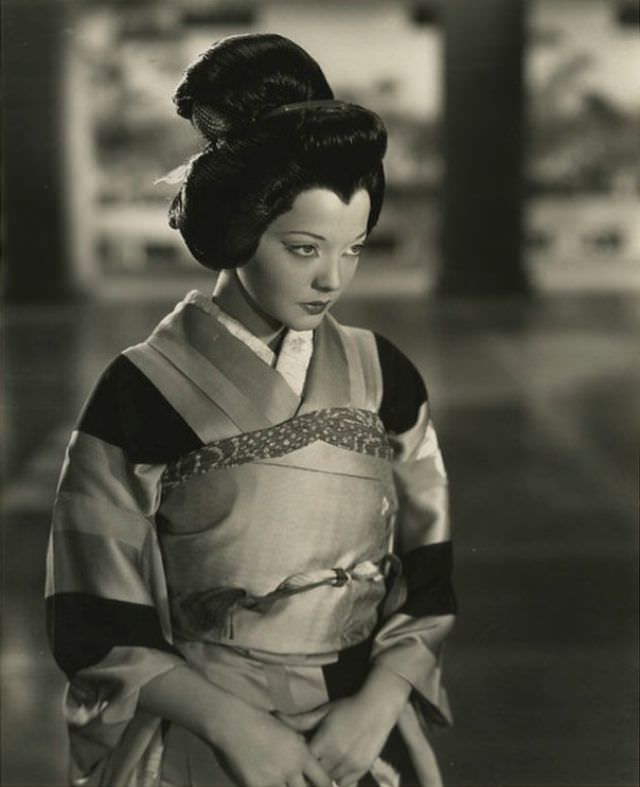
Sylvia Sidney appears here in a carefully composed studio portrait connected to “Madame Butterfly” (1932), her gaze lowered as if caught mid-thought. The elaborate coiffure and layered kimono styling signal Hollywood’s fascination with theatrical Eastern motifs, rendered in soft lighting that favors mood over spectacle. Even without motion or dialogue, the still suggests a dramatic pause—quiet, inward, and charged with feeling.
Costume details do much of the storytelling: crisp folds, contrasting bands of fabric, and a patterned obi draw the eye across the frame while keeping the performer’s face at the center of attention. The blurred background—suggesting screens or set dressing—adds a stage-like depth, reminding us that early 1930s movies relied heavily on design, posture, and expression to communicate character. It’s the kind of publicity image meant to sell emotion as much as plot, inviting audiences into a romantic tragedy before they ever bought a ticket.
For fans of classic cinema history, this photo offers a window into how “Madame Butterfly” was marketed in the Movies & TV era of the early sound years, when star image and visual atmosphere carried enormous weight. Sidney’s poised restraint fits the period’s taste for glamorous seriousness, and the portrait stands as a striking artifact of 1932 film culture. Whether you’re searching for Sylvia Sidney collectibles, vintage Hollywood portraits, or “Madame Butterfly” movie memorabilia, this still remains a memorable piece of screen history.