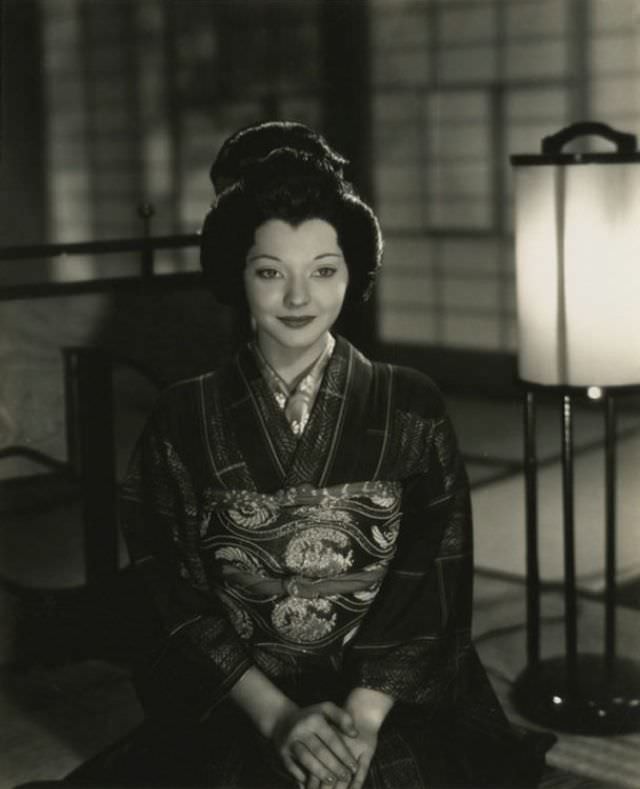
Soft lamplight frames Sylvia Sidney in a carefully arranged interior, where patterned screens and a low, composed pose set the mood for “Madame Butterfly” (1932). Her kimono’s intricate weave and the deliberate styling of her hair signal Hollywood’s fascination with theatrical elegance, while her steady gaze keeps the portrait intimate rather than purely decorative. Even in a single still, the period’s studio craftsmanship—controlled shadows, smooth focus, and balanced staging—comes through clearly.
A quiet confidence sits on her expression, hinting at the emotional range audiences expected from early 1930s movie drama. The image reads like a pause between scenes: hands folded, posture formal, yet the face alive with suggestion, inviting viewers to imagine the character’s inner life beyond the frame. That blend of restraint and intensity is part of what makes classic film photography so effective at selling a performance before a word is spoken.
For readers exploring vintage Hollywood, this post connects a star’s screen presence with the visual language that helped define movies & TV in the era. Searches for Sylvia Sidney, “Madame Butterfly” 1932, and classic cinema portraits often lead to images like this—publicity stills that doubled as storytelling. Consider it a window into how studios shaped atmosphere and expectation, turning costume, light, and expression into an unforgettable promise of drama.