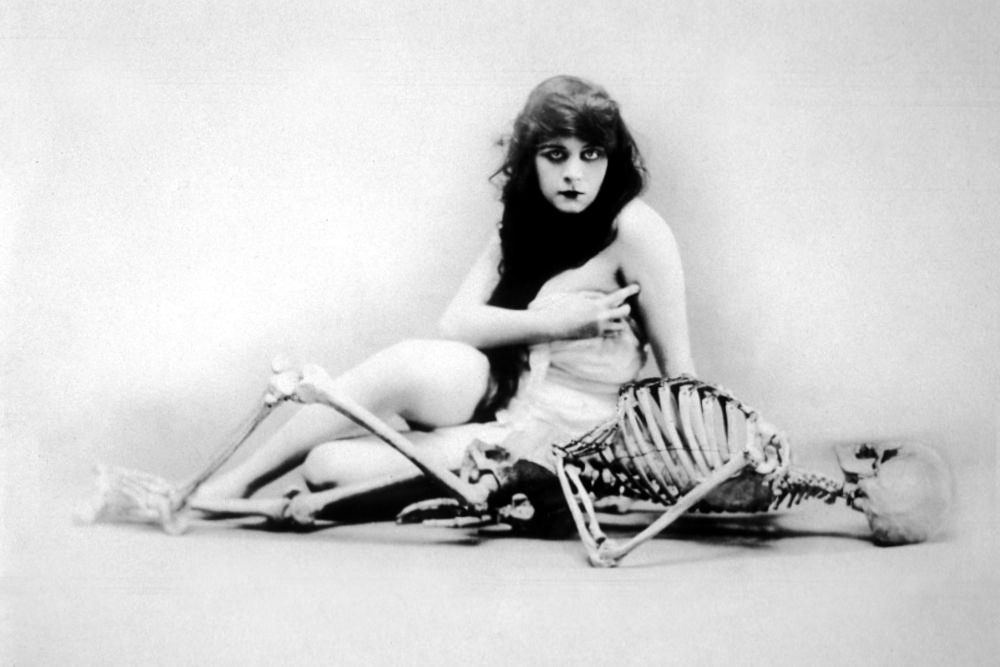
Reclining against a pale studio backdrop, Theda Bara fixes the viewer with a direct, theatrical gaze while a skeleton sprawls at her side, its ribs and skull turned toward the camera like a macabre co-star. The pose is carefully staged: soft fabric and bare limbs contrasted with hard bone, glamour paired with mortality. Even without motion or intertitles, the tableau reads instantly as silent film publicity—bold, symbolic, and designed to linger in the mind.
Made to promote the 1915 silent film *A Fool There Was*, the photograph leans into the era’s fascination with moral fables and sensational imagery. Bara’s heavy eye makeup and dark hair frame a persona that early Hollywood marketed as dangerously alluring, while the skeleton acts as a visual shorthand for ruin and consequence. It’s the kind of promotional still that sold a mood as much as a story, promising audiences a drama of temptation, obsession, and downfall.
For collectors of classic Movies & TV memorabilia, this is a striking piece of early cinema history and an emblem of how silent-era studios crafted star power through shocking iconography. The clean negative space, dramatic lighting, and theatrical props make it equally compelling for film historians, gothic art enthusiasts, and fans of vintage Hollywood photography. As a window into 1910s movie marketing, it reminds us how a single image could define a character, a film, and a legend.