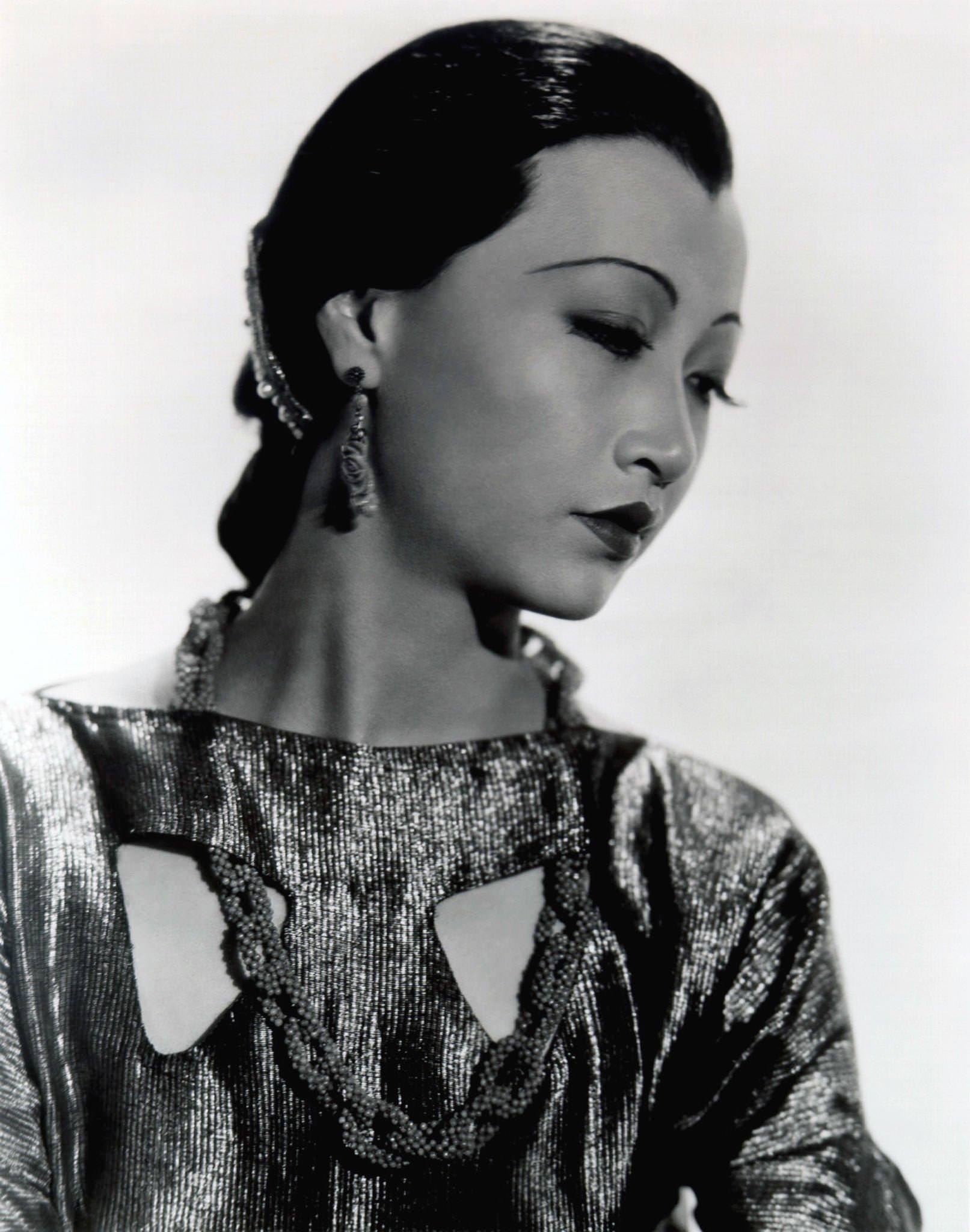
Elegance is the first thing that strikes you here: Anna May Wong is posed in profile, her gaze turned slightly away, with sleek, sculpted hair and a calm, self-possessed expression. The metallic sheen of her dress catches the studio light, while long earrings and a draped beaded necklace add movement and texture to the composition. It’s a portrait that feels both modern and meticulously styled, echoing the glamorous visual language of late-1920s cinema.
Set against the title’s mention of Piccadilly in 1929, the image invites thoughts of London’s entertainment district at a moment when film, theatre, and nightlife fed each other’s energies. Wong’s look blends fashion-forward sophistication with a controlled, cinematic intensity, suggesting the careful crafting of a screen persona for publicity and press. Even without a visible street scene, the photograph carries the mood of a city’s bright lights distilled into a single, polished frame.
For readers interested in classic Hollywood, early sound-era stardom, and the history of Asian representation on screen, this is a compelling glimpse of Anna May Wong at her most iconic. The clean background and sharp lighting emphasize her features and styling, making the portrait feel timeless in a way that still photographs often do when they were made with film promotion in mind. As a piece of movie and TV history, it also doubles as a fashion snapshot—capturing the streamlined glamour that defined the period.