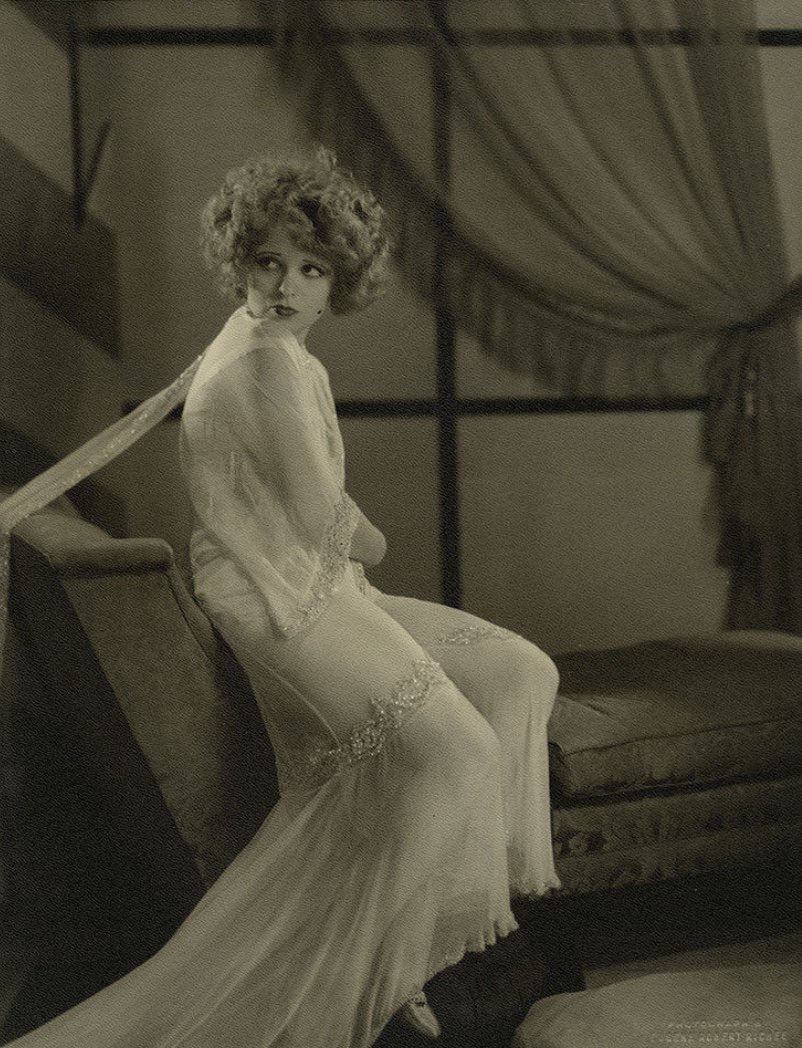
Poised on the edge of a chaise lounge, Clara Bow turns her head as if someone has just spoken off-camera, letting the moment hover between invitation and uncertainty. The costume—silky and sheer with delicate lace—catches the studio light in soft gradients, while her short, curled hair and expressive eyes anchor the look in classic early-Hollywood glamour. Draped curtains and an uncluttered interior set keep attention on posture and mood, a quiet kind of drama built from fabric, shadow, and a single backward glance.
As a promotional image tied to *Her Wedding Night* (1930), the scene leans into the era’s favorite mixture of romance and suggestion without spelling anything out. The styling reads as an intimate boudoir tableau, carefully staged to feel spontaneous: the trailing veil-like wrap, the relaxed bend of the knee, the way the gown pools along the couch. It’s a reminder of how studios sold personality as much as plot—star presence distilled into one still frame meant to linger in magazines, lobby displays, and fans’ scrapbooks.
Placed in the Movies & TV context, this photograph also speaks to a turning point in film history, when the look of screen acting and publicity shifted with new technologies and changing tastes. Bow’s image here balances the playful modernity associated with late silent-era stardom and the more polished, controlled aesthetics of early 1930s studio portraiture. For collectors and classic cinema readers, it’s an evocative piece of Hollywood history: a star, a role, and a carefully composed atmosphere that keeps the story just out of reach.