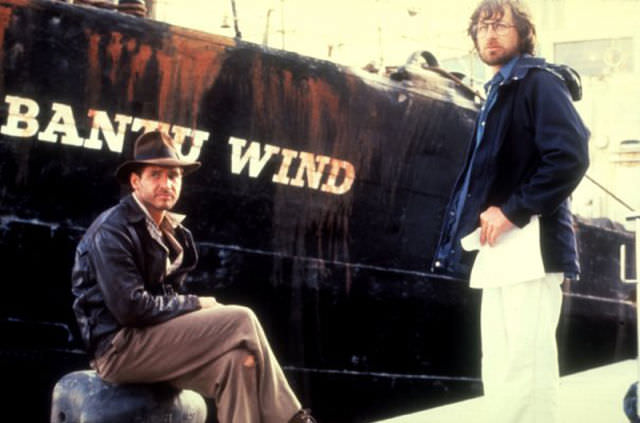
Against the dark hull of the ship marked “BANTU WIND,” two familiar figures from modern filmmaking pause for a candid moment: one seated in a fedora and leather jacket, the other standing with papers in hand and a serious, windblown look. The framing is simple and workmanlike, more set snapshot than studio glamour, and the weathered paint on the vessel lends a salty authenticity that moviegoers rarely consider when the scene flashes by on screen.
Harrison Ford’s costume instantly evokes Indiana Jones, while Steven Spielberg’s presence hints at the careful planning behind the adventure—blocking, coverage, and the constant problem-solving that happens between takes. The Bantu Wind itself becomes a character here, its name emblazoned in bold letters like a prop with real weight, suggesting the production’s effort to ground a larger-than-life story in tangible textures of steel, rope, and seafaring grit.
For fans of Raiders-era filmmaking, this behind-the-scenes photo is a reminder that iconic moments begin with ordinary logistics: a boat to dress, a deck to stage, and a director conferring with his star just off camera. It’s a perfect fit for a Movies & TV post that celebrates practical sets and the craft of location work, offering a nostalgic look at how the Ark’s journey was built from real surfaces, real light, and the collaboration of the people who made the legend.