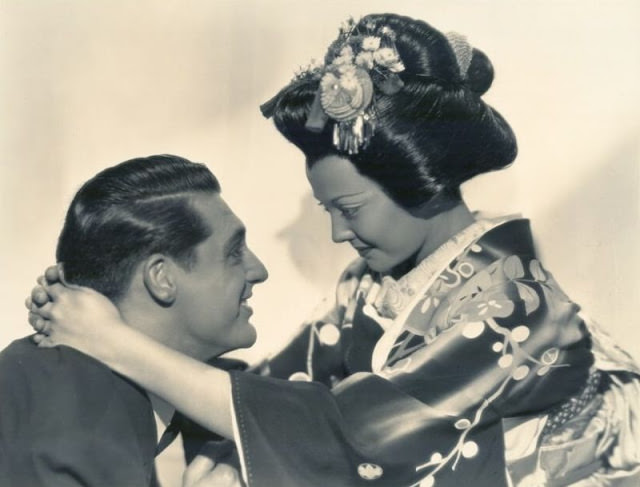
A tender close-up draws you into the kind of screen romance early-1930s cinema did so well: a woman in an ornate kimono and carefully arranged hair leans toward a smiling man, her arms resting around his shoulders as their faces nearly meet. The styling is unmistakably theatrical, with glossy studio lighting and costume detail designed to read clearly even in a still frame. Together, their expressions suggest a suspended moment—affection tempered by the awareness that something fragile is at stake.
Sylvia Sidney’s association with “Madame Butterfly” brings extra weight to this image, since the story has long carried themes of devotion, cultural encounter, and heartbreak across stage and screen. Even without dialogue, the posture and gaze imply performance choices that were central to classic Hollywood melodrama: intimacy staged for the camera, emotion conveyed through controlled gesture, and a romantic ideal that feels both sincere and heightened. The costume’s patterned fabric and floral hair ornaments reinforce the production’s reliance on visual symbolism, a hallmark of studio-era storytelling.
For collectors of 1932 movies and TV history, photos like this function as miniature time capsules—part publicity, part art, and part record of how adaptations were imagined for audiences of the day. They also invite a closer look at film-era star image, where actors were photographed in character to sell mood and narrative in a single glance. If you’re exploring Sylvia Sidney’s career or the evolving screen legacy of “Madame Butterfly,” this still offers a compelling window into the era’s aesthetics and emotional vocabulary.