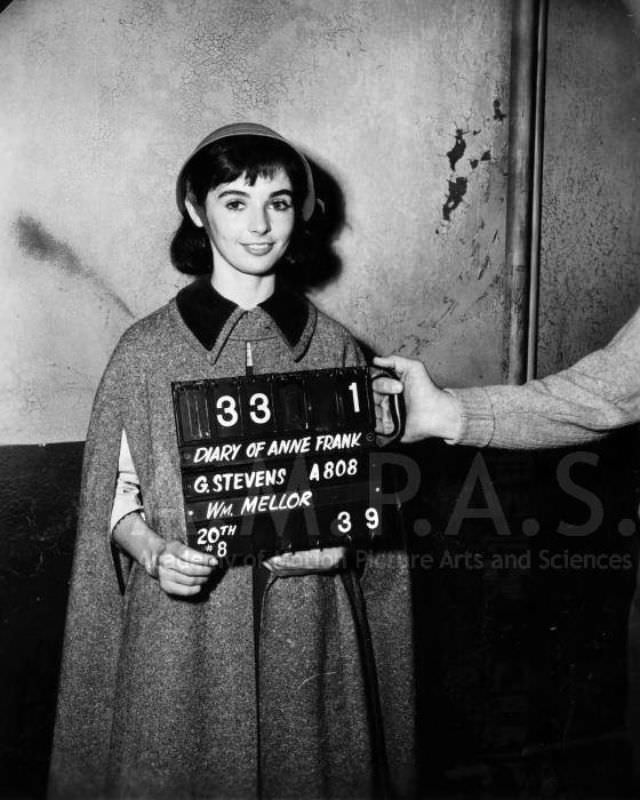
Millie Perkins stands before a rough, worn wall in costume as Anne Frank, her calm expression momentarily breaking the tension that surrounds the story she was chosen to portray. A production slate is held up beside her, grounding the scene in the practical rhythm of filmmaking even as the subject matter points to far darker realities. The contrast between the young actor’s poised smile and the stark backdrop makes the behind-the-scenes moment feel especially intimate.
On the clapperboard, “DIARY OF ANNE FRANK” is clearly written, along with take and crew details that place the image squarely on a working set rather than a staged publicity portrait. Wardrobe and styling suggest a careful effort toward period authenticity, from the simple coat to the modest headwear, emphasizing how much of historical cinema is built from fabric, light, and small choices. It’s a reminder that the film’s emotional weight was constructed shot by shot, under studio lamps and schedule pressures.
Behind-the-scenes photos like this have become a valuable part of Movies & TV history, offering a window into how mid-century productions approached adaptation and memory. For readers searching for “The Diary of Anne Frank (1959) filming,” “Millie Perkins Anne Frank,” or classic Hollywood production stills, this image encapsulates the intersection of performance and remembrance. In a single frame, it preserves both the craft of cinema and the responsibility carried when translating a widely known diary to the screen.