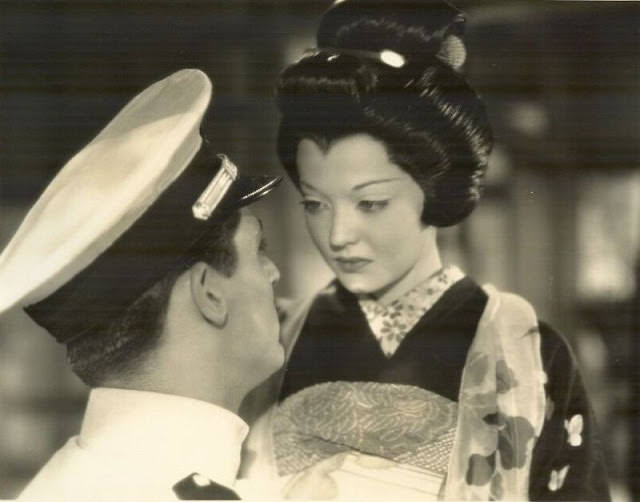
A quiet, tense moment hangs between a uniformed sailor and a young woman in traditional dress, her gaze lowered with a mix of poise and worry. The styling—carefully arranged hair, patterned kimono layers, and soft studio lighting—signals the kind of 1930s Hollywood craftsmanship that leaned heavily on close-ups to carry emotion. Even without dialogue, the frame suggests a story built on longing, cultural distance, and promises that may not hold.
Sylvia Sidney’s “Madame Butterfly” screen presence is often remembered for how much she conveys with restraint, and the photograph speaks to that reputation. Her expression is controlled yet vulnerable, inviting the viewer to read the unspoken thoughts behind the composed face. For fans searching classic movie stills, early sound-era drama, or 1932 film history, this image functions like a teaser for the tragedy at the heart of the tale.
Cinema and opera have long traded versions of “Madame Butterfly,” and Hollywood’s adaptations helped shape how audiences pictured the narrative in the early twentieth century. The sailor’s cap and crisp uniform bring the power imbalance into focus, while the intimate framing keeps the scene personal rather than grand. As a piece of vintage Movies & TV memorabilia, the still offers a textured glimpse into studio-era performance style, costume design, and the emotional storytelling that made Sidney’s turn so enduring.