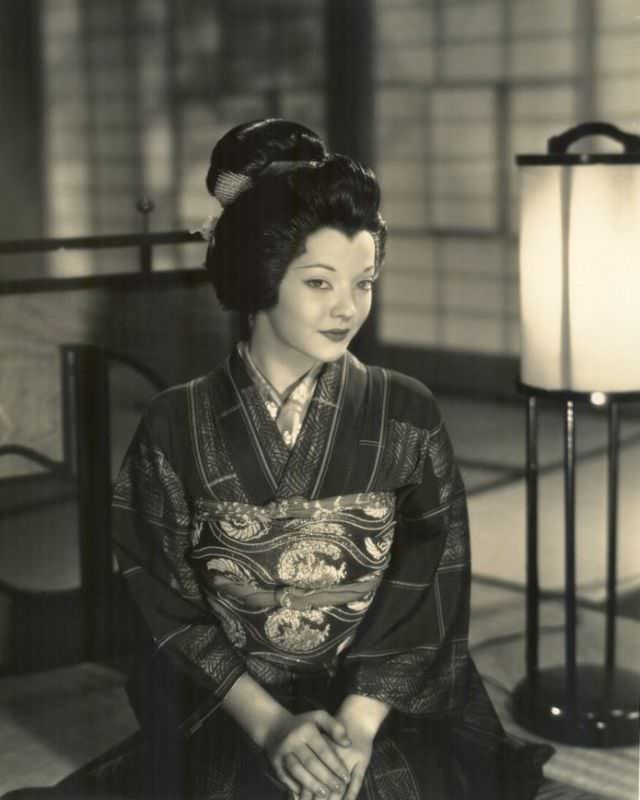
Soft lamplight falls across a poised woman in traditional Japanese dress, her patterned kimono and neatly arranged coiffure framed by sliding screens and simple interior lines. The studio composition is calm and intimate, inviting the viewer to linger on the details—the brocade sash, the careful posture, the almost-private glance held just off camera. Even without motion, the scene suggests a film moment built on restraint and emotion rather than spectacle.
Linked to the 1932 screen version of “Madame Butterfly,” the image evokes Hollywood’s enduring fascination with theatrical stories adapted for Movies & TV during the early sound era. Costuming and set design work together here as visual shorthand for character and mood, emphasizing elegance, delicacy, and the sense of a world enclosed. It’s the kind of promotional still that promised audiences romance and tragedy through atmosphere alone, with performance implied in the eyes and the stillness of the hands.
For readers searching Sylvia Sidney “Madame Butterfly” 1932, this photograph offers a striking window into how classic cinema sold drama through beauty, composition, and star presence. The controlled lighting and period styling underline the era’s approach to storytelling—expressive faces, carefully staged interiors, and a heightened sense of the theatrical. As a piece of film history, it’s both an artifact of studio-era publicity and a reminder of why certain performances continue to be discussed long after the projector went dark.