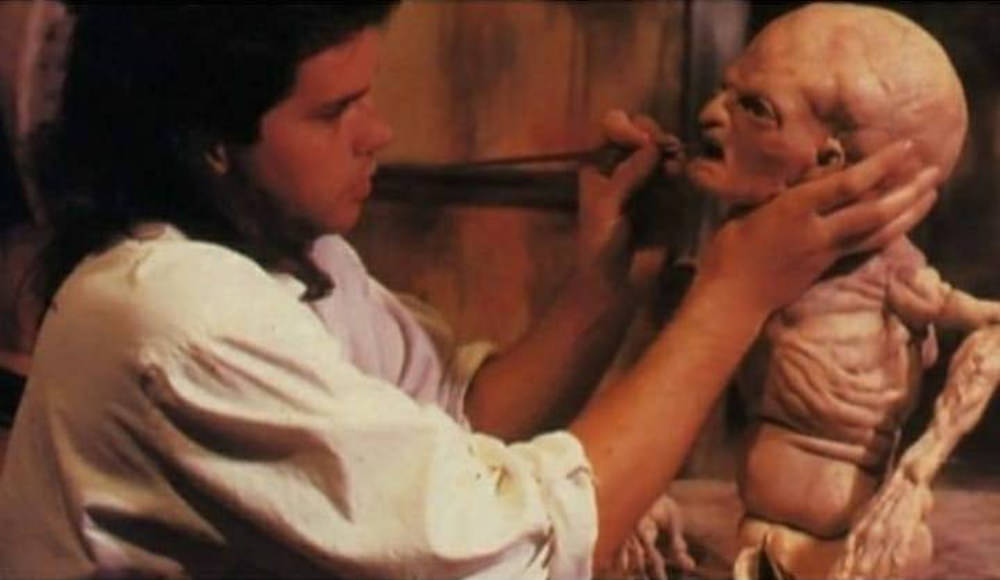
Under warm, workshop-like lighting, a special effects artist leans in with a small brush, carefully detailing the face of a grotesque infant puppet—one of the unsettling creations associated with *A Nightmare on Elm Street 5: The Dream Child* (1989). The close framing makes the moment feel intimate and meticulous, trading on-the-screen terror for the quiet concentration of craftsmanship. It’s a reminder that the era’s most nightmarish imagery was often built by hand, one careful stroke at a time.
Late-1980s horror thrived on practical effects, and this behind-the-scenes glimpse highlights the tactile reality behind the franchise’s dream logic. The puppet’s wrinkled skin, exaggerated features, and lifelike posture suggest layers of sculpting, painting, and mechanical planning that predate the digital shortcuts audiences might expect today. For fans of movie makeup, creature design, and the history of special effects, the photo offers a rare look at how physical materials were transformed into something memorably disturbing.
As a piece of movie history, the image also speaks to the collaborative, artisanal side of filmmaking—where artists, technicians, and builders shaped a film’s tone as surely as any performance or camera move. Readers searching for behind-the-scenes photos from *A Nightmare on Elm Street 5*, 1989 horror memorabilia, or practical effects techniques will find plenty to linger over here. The result is equal parts eerie and fascinating: proof that the most frightening scenes often begin in a quiet room with steady hands and a paintbrush.