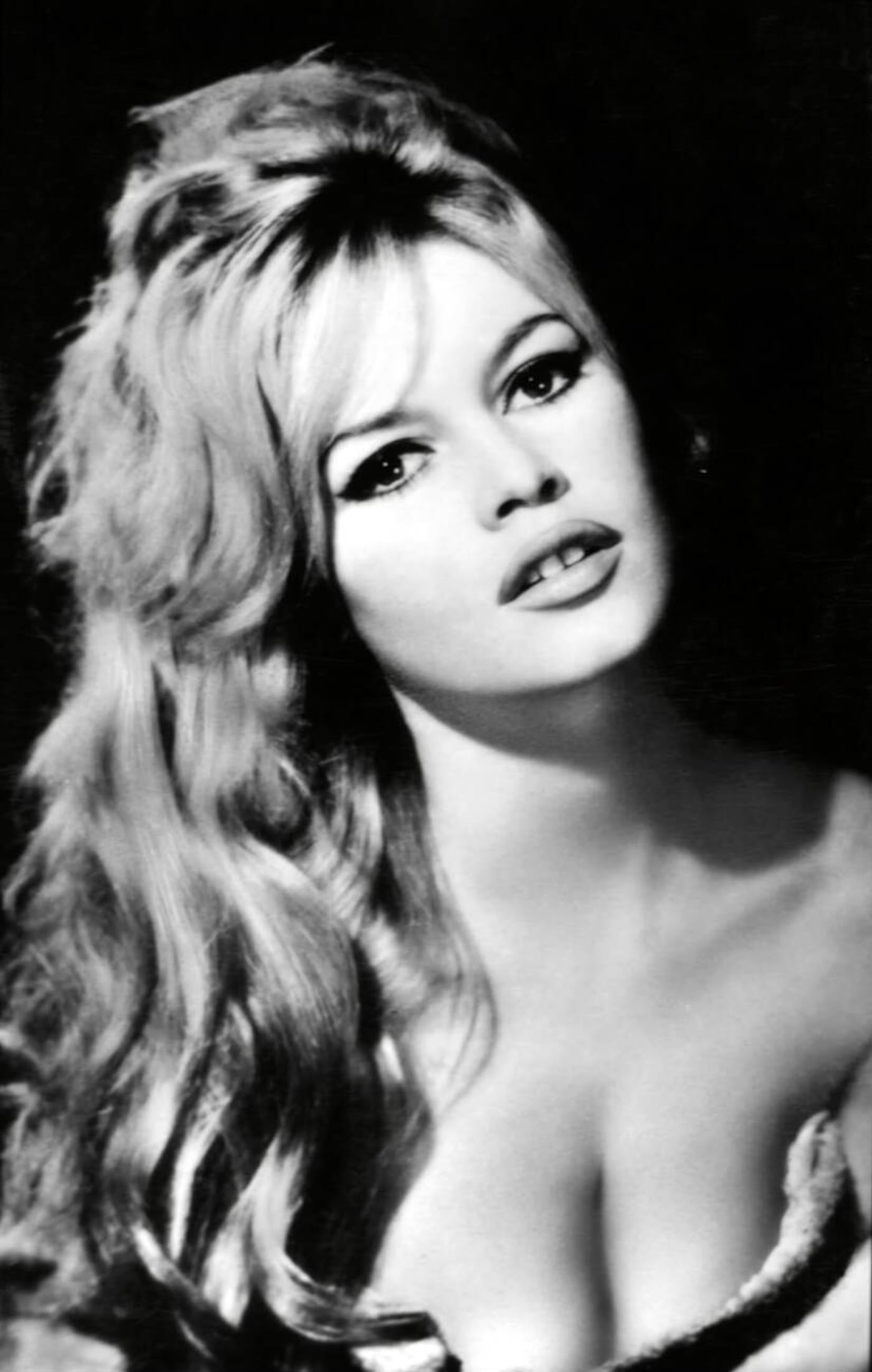
Brigitte Bardot’s face fills the frame with an off-camera gaze that feels equal parts dreamy and guarded, a quiet tension that echoes the emotional undercurrents of Jean-Luc Godard’s *Contempt* (1963). The close-up emphasizes her signature 1960s styling—soft, voluminous hair and dramatic eye makeup—while the high-contrast lighting sculpts her features against a dark, uncluttered background. Even without context from the surrounding scene, the portrait reads like a moment of private thought caught mid-breath.
What makes the image so enduring is its blend of glamour and distance, a hallmark of mid-century European cinema and the French New Wave’s fascination with performance, identity, and looking. Bardot’s presence is unmistakably movie-star radiant, yet the framing keeps everything intimate and slightly uneasy, as though the camera is too close for comfort. That push and pull—between icon and character, allure and restraint—helps explain why stills from *Le Mépris* continue to circulate as cultural shorthand for art-house elegance.
For film history lovers and collectors of classic cinema photography, this is a striking example of 1960s movie iconography at its most refined. It also works beautifully as a visual companion to discussions of Godard’s style, Bardot’s screen persona, and the lasting influence of *Contempt* on fashion, portrait lighting, and cinematic romance. Whether you arrived here searching for “Brigitte Bardot Contempt 1963” or simply browsing Movies & TV nostalgia, the image invites a longer look—and a return to the film’s famously modern melancholy.