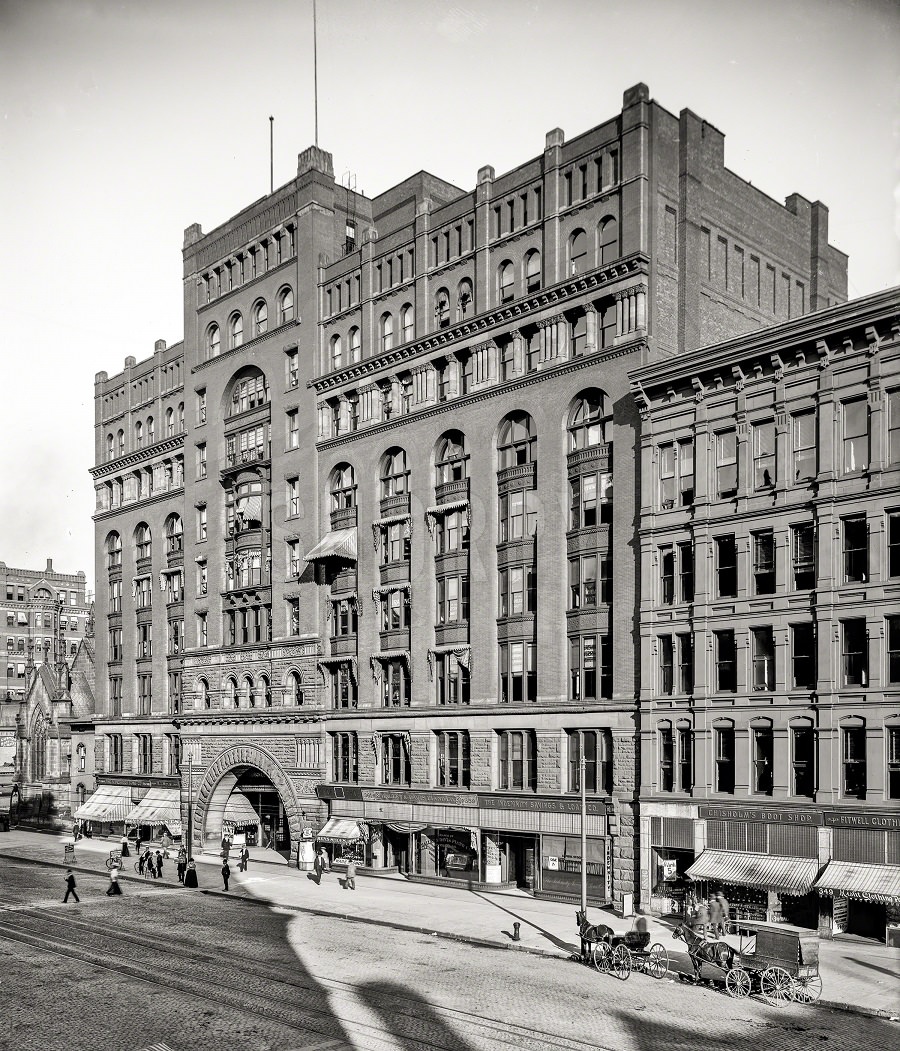
Rising above Superior Avenue, Cleveland’s Arcade Building dominates the streetscape with a confident mix of heavy stonework and graceful arches. The broad entryway draws the eye like a gateway into the city’s commercial heart, while upper floors stack neatly in rows of tall windows and decorative trim. Even from the sidewalk, the architecture signals ambition—an urban landmark built to impress shoppers, tenants, and passersby alike around the turn of the twentieth century.
Street life animates the foreground: pedestrians in period dress move along the storefronts, pausing near awnings and display windows that hint at bustling retail trade. A horse-drawn wagon waits at the curb, underscoring a moment when Cleveland’s downtown streets still belonged as much to hoofbeats as to modern traffic. The long shadows and crisp details make the scene feel immediate, like a quiet pause between deliveries, errands, and the steady rhythm of a working city.
Superior Avenue’s dense lineup of buildings frames the Arcade as both neighbor and standout, capturing how closely packed commerce and daily life were in historic Cleveland. For readers interested in Cleveland history, downtown architecture, or the evolution of American city streets, this circa-1900 view offers rich visual evidence—from masonry patterns to shopfront signage—of how the city presented itself at the height of its growth. It’s a reminder that behind every grand facade was a lived-in world of small transactions, hurried footsteps, and the promise of modern urban life.