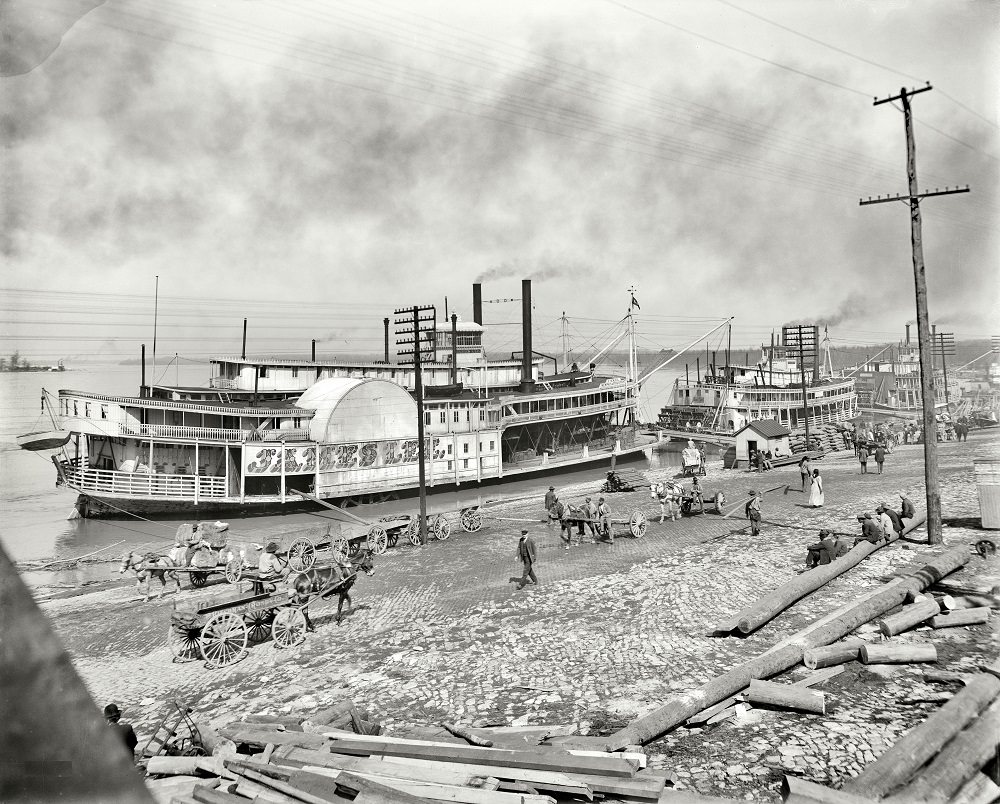
Along the Mississippi River around 1900, a busy landing comes alive with sidewheel steamboats tied up along the waterfront, their tall stacks and layered decks rising above the haze of smoke. Ornamental trim and painted panels hint at the pride these vessels carried, even as the riverbank works at a practical, gritty pace. Telegraph and utility poles cut through the sky, quietly signaling how modern communications were threading into the older rhythms of river travel.
On the cobbled shore, teams of horses pull wagons loaded for trade, while workers and onlookers weave between cargo and coiled ropes. Lumber and long timbers lie stacked in the foreground, suggesting ongoing construction and constant repair—an everyday necessity where boats, docks, and towns met. The scene reads like a snapshot of logistics before trucks and highways took over: riverboats, animal power, and human labor moving goods one load at a time.
What makes this Mississippi River photo so compelling is its blend of industry and community, where transportation history and local life share the same frame. It evokes the era when steamboat commerce connected inland farms and river cities, carrying freight and passengers along one of America’s most important waterways. For anyone drawn to Mississippi River history, steamboats, or early 20th-century waterfronts, this view offers a richly detailed glimpse of places and people at work.