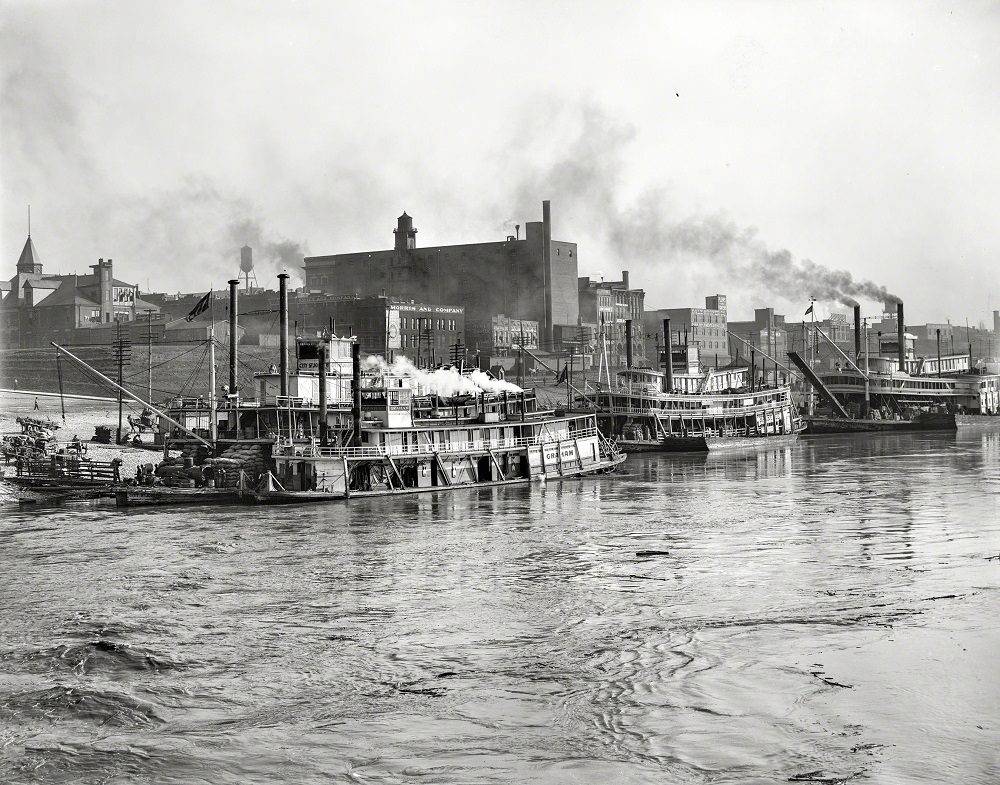
From the deck of a ferry, the Mississippi River levee at Memphis comes into view as a working waterfront rather than a distant skyline. The river dominates the foreground with rippling, fast-moving water, while a line of moored steamboats presses against the bank, their tall stacks and rigging forming a dense thicket of industry. Smoke drifts across the scene, softening the outlines of warehouses and commercial buildings that rise behind the levee.
Along the landing, gangplanks, pilings, and dockside equipment hint at constant loading and unloading—cotton, timber, and everyday goods moving between riverboat and city. Multiple vessels sit side by side, suggesting a busy stretch of the port where schedules, whistles, and steam power set the rhythm of daily life. The elevated embankment itself reads as both infrastructure and barrier, a reminder that the river that fueled commerce also demanded control.
Circa 1908, Memphis was a pivotal node on the Mississippi, and this view captures that role in practical, unromantic detail: boats, water, smoke, and brickwork arranged for trade. For readers interested in Memphis history, river transportation, and early twentieth-century Southern industry, the photograph offers a rich snapshot of places and people implied by the work underway. It’s a strong visual starting point for exploring how the levee shaped the city’s economy and its relationship with the ever-changing river.