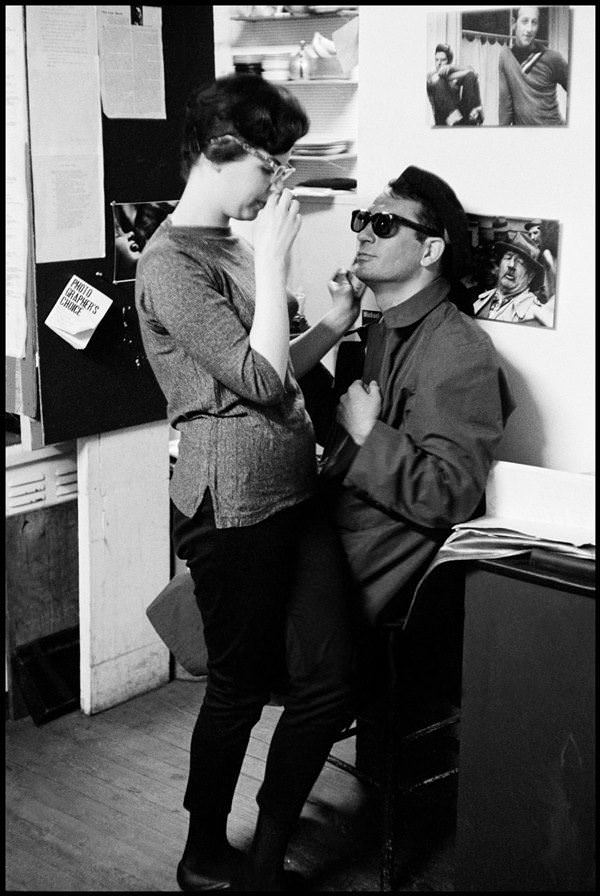
A cramped room becomes a small stage for Beat-era intimacy: Jack Kerouac sits back in dark sunglasses and a beret-like cap while a friend leans in close, cigarette poised, their conversation sealed by the hush of proximity. The casual posture and half-turned bodies suggest a party scene less about posing and more about the quick, electric exchange of ideas—the kind of talk that drifted between literature, music, and late-night plans.
Behind them, the details do as much storytelling as the faces: shelves stacked with everyday clutter, papers and folders spilling across a surface, and walls peppered with photos and clippings that turn the space into a lived-in collage. It’s the texture of an apartment that has hosted too many visitors to stay tidy, the sort of informal salon where writers and friends could argue, flirt, or simply listen while the night kept moving.
Kerouac’s presence ties the moment to the broader mythology of the Beat Generation, yet the photograph resists grand statements and instead lingers on atmosphere—smoke, shadows, and a private conversation amid a public gathering. For readers searching for Beat party history, candid portraits of Jack Kerouac, or the everyday spaces where countercultural art took shape, this image offers a grounded glimpse of the people and places that made the era feel real.