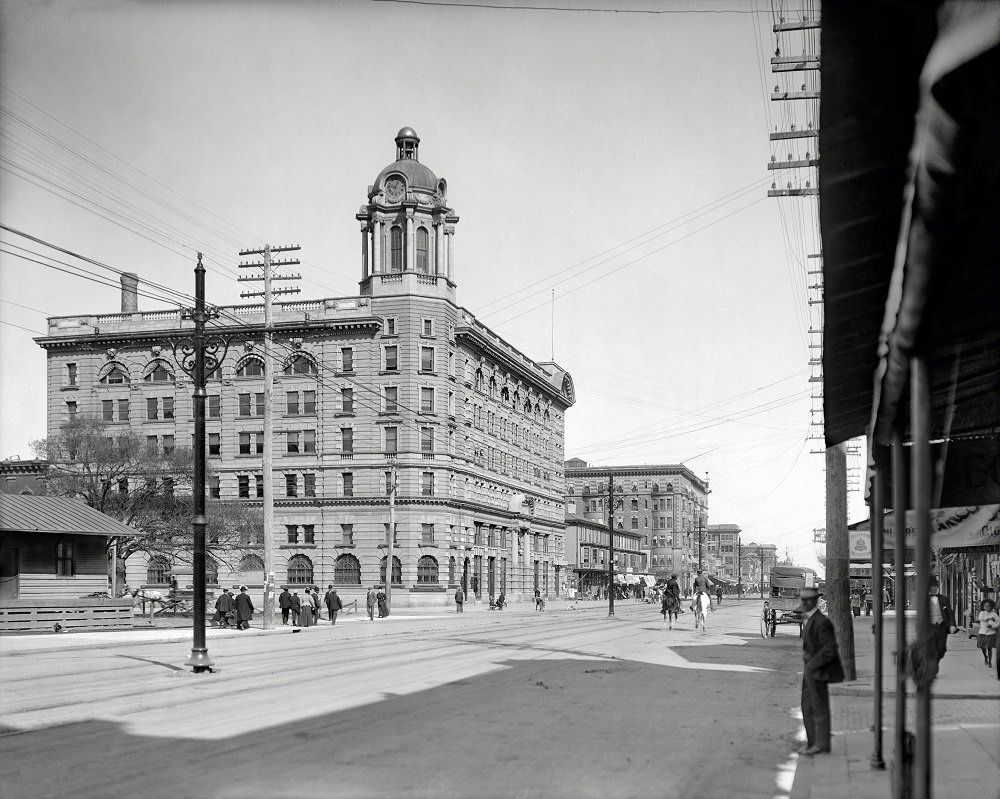
Atlantic Avenue in 1908 feels wide and purposeful, a corridor built for movement and commerce. The eye is drawn to a substantial masonry building anchored by a domed corner tower, its arched windows and layered stonework signaling civic confidence and big-city ambition. Overhead, a web of utility wires stretches between poles, hinting at the modern systems—electric power, telephones, and street lighting—that were rapidly reshaping urban life. Street-level details bring the scene to life: pedestrians cluster near the curb, while horse-drawn wagons and early traffic share the broad roadway. Awnings and storefront fronts line the right edge, suggesting a busy retail strip where daily errands and casual conversations unfolded beneath shaded sidewalks. In the distance, more multi-story blocks stack along the avenue, reinforcing the sense of a growing downtown spine. For anyone interested in Atlantic Avenue history, this photograph offers a clear window into streetscape design at the start of the twentieth century—before automobiles fully dominated and before later redevelopment altered the rhythm of older commercial districts. Architectural grandeur, working infrastructure, and everyday foot traffic appear together in one frame, making it a rich reference for local historians, preservation enthusiasts, and readers exploring early urban life.