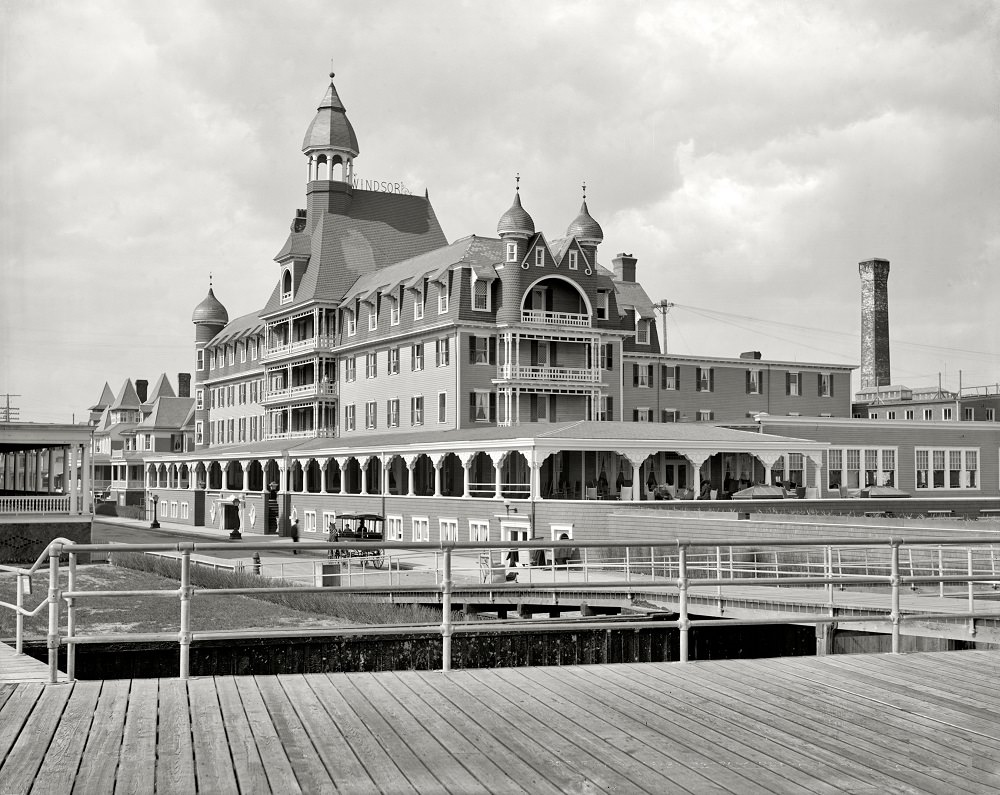
Rising above the Atlantic City boardwalk, the Hotel Windsor announces itself with a playful mix of turrets, dormers, and broad verandas, its name perched high on the roofline like a promise to arriving guests. The long, shaded arcade at street level hints at the steady flow of summer visitors who came for sea air, entertainment, and the peculiar thrill of a resort city built right at the edge of the sand. Even without a close view of faces, the scene feels busy in that turn-of-the-century way—grand architecture designed to be seen, and to see from. Across the foreground, the wooden planks and railings of the boardwalk frame the hotel like a stage, emphasizing how important this seaside promenade was to daily life and tourism in early 1900s New Jersey. A small bridge-like crossing and the open space between buildings suggest the practical infrastructure that kept the resort functioning—paths, access points, and the constant negotiation between oceanfront leisure and the town behind it. Details such as the covered porches, multiple balconies, and the hotel’s sprawling footprint speak to an era when accommodations were experiences unto themselves. Dated to circa 1906, this historic photograph offers a vivid glimpse into Atlantic City’s architectural confidence at the height of its growth as a premier East Coast destination. For readers interested in the history of the Atlantic City boardwalk, classic seaside hotels, and early twentieth-century travel culture, the Hotel Windsor stands as a reminder of how resorts marketed comfort, spectacle, and proximity to the shore. It’s a quietly dramatic view—part postcard, part urban document—preserving a moment when the boardwalk and its landmarks were defining modern leisure for countless visitors.