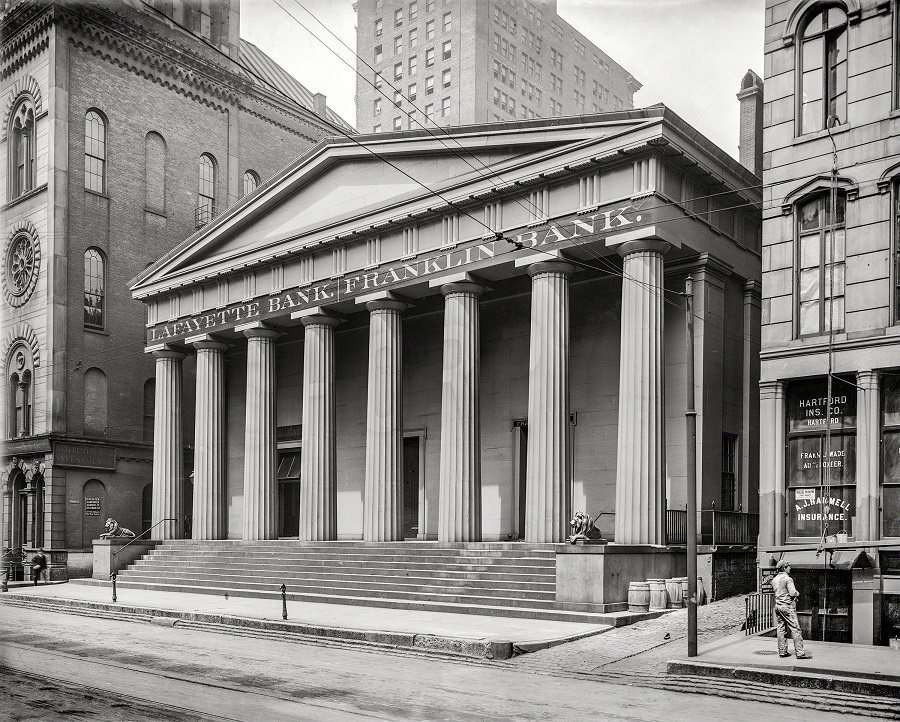
Rising from Third Street with a temple-like front, the Lafayette Bank and Franklin Bank building projects confidence through classical architecture—tall fluted columns, a deep portico, and broad steps that elevate the entrance above the bustle of Cincinnati’s downtown. The bold lettering across the entablature makes the institution’s identity unmistakable, while overhead wires trace the era’s streetcar infrastructure across the sky. Behind and around the bank, taller commercial blocks crowd the frame, underscoring how quickly the city was building upward in the early twentieth century.
Stone, brick, and glass compete for attention in the surrounding streetscape: a richly detailed church façade anchors the left edge, while a multi-story office building and storefront signage press in from the right. The street itself looks comparatively quiet, its surface and curbs sharply defined, as if waiting for the next wave of pedestrians and street traffic. Even small details—barrels near the corner, railings by the steps, and the clean geometry of the sidewalk—help place this scene in a moment when urban order and institutional solidity were selling points.
Bank architecture in this period was meant to communicate safety, permanence, and civic pride, and this view captures that message with remarkable clarity. For anyone researching Cincinnati history, Third Street, or the evolution of American banking districts, the photograph offers a crisp look at how financial institutions branded themselves in the built environment. It’s also a compelling “then” snapshot for local heritage enthusiasts, inviting comparisons with what stands on the block today and how the rhythms of downtown life have changed since circa 1905.