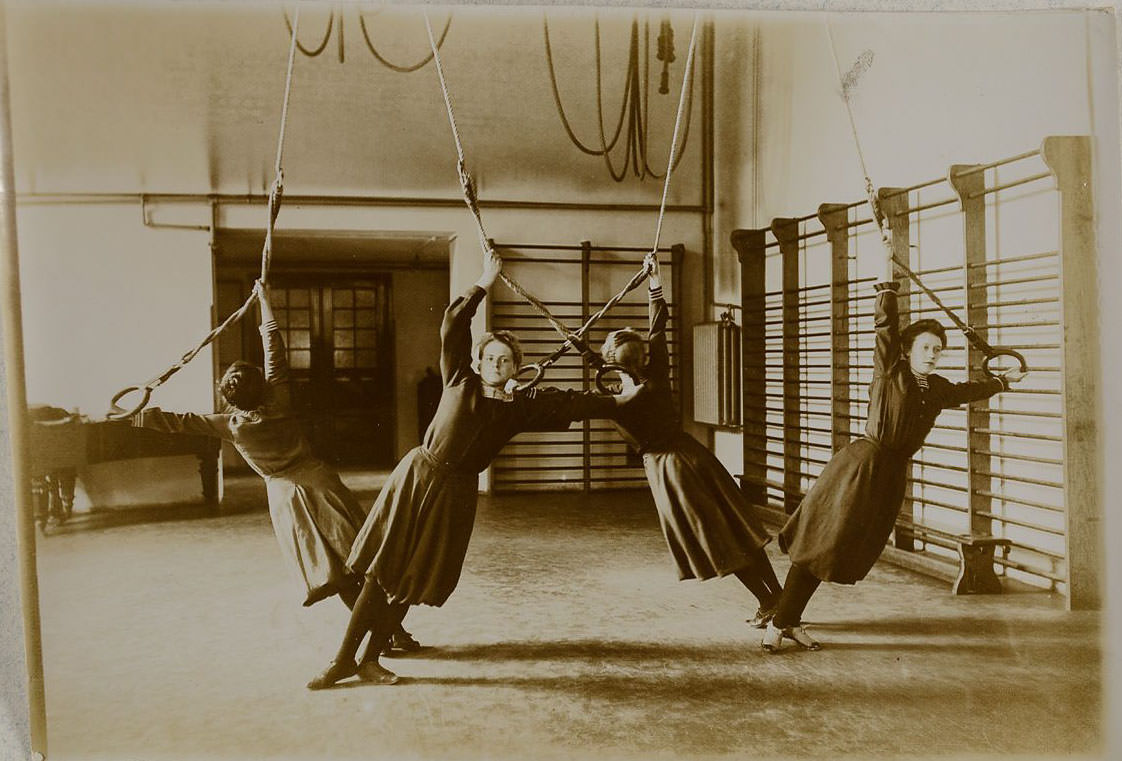
Long skirts swing slightly as a line of German women lean back in unison, hands fixed to ropes and ring handles suspended from the ceiling. The gym hall feels orderly and modern for its time, with wall bars along one side and open floor space that emphasizes balance, posture, and control. Their matching, disciplined stance hints at Swedish gymnastics—structured calisthenics designed to build strength and flexibility through precise, repeatable movements.
Inside this practice space in Heinrich, Germany, the equipment tells its own story: rings, ropes, and climbing lines arranged for instruction rather than spectacle. The women’s expressions are focused, suggesting an exercise culture that valued coordination and body training as part of education and community life. Details like the uniform clothing and the carefully maintained room underline how organized sport and physical training were becoming normalized in the early 1900s.
For readers interested in sports history, women’s fitness, and European physical culture, this photograph offers a vivid glimpse of the era’s gymnasium routines. Swedish gymnastics in Germany connected health ideals with discipline, shaping how exercise was taught and performed across generations. It’s a striking reminder that athletic practice was not only about competition, but also about collective movement, form, and the promise of strength through method.