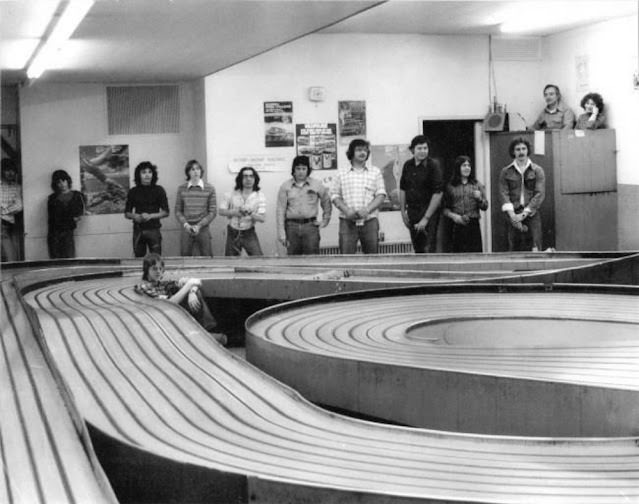
Neon-bright shop lights hang over a sprawling slot car track, its lanes sweeping through tight bends and long straights like a miniature speedway built for drama. Along the back wall, a line of spectators—mostly young men in casual shirts and jackets—stands shoulder to shoulder, watching the action with the focused stillness of people following a real race. Posters and signage cluster behind them, reinforcing the feel of a dedicated hobby space where racing culture lived indoors.
In the era before home consoles and online lobbies, places like this were social hubs, equal parts competition and hangout. The track’s sheer scale hints at why slot car racing became a 1960s obsession: it offered the thrills of motorsport in a form you could tune, tinker with, and master, one lap at a time. Even the body language in the room suggests anticipation—hands clasped, eyes trained on the lanes, waiting for a clean pass or a costly spin-out.
What makes the scene endure is how familiar it still feels to modern gamers and hobbyists, despite the analog setting. Slot car racing blended engineering, reflexes, and bragging rights, turning a local storefront into an arena where skill mattered and communities formed. For anyone searching the history of slot car racing, 1960s youth culture, or America’s pre-video-game entertainment, this photo is a vivid reminder of the pastime that once roared loudest on a tabletop.