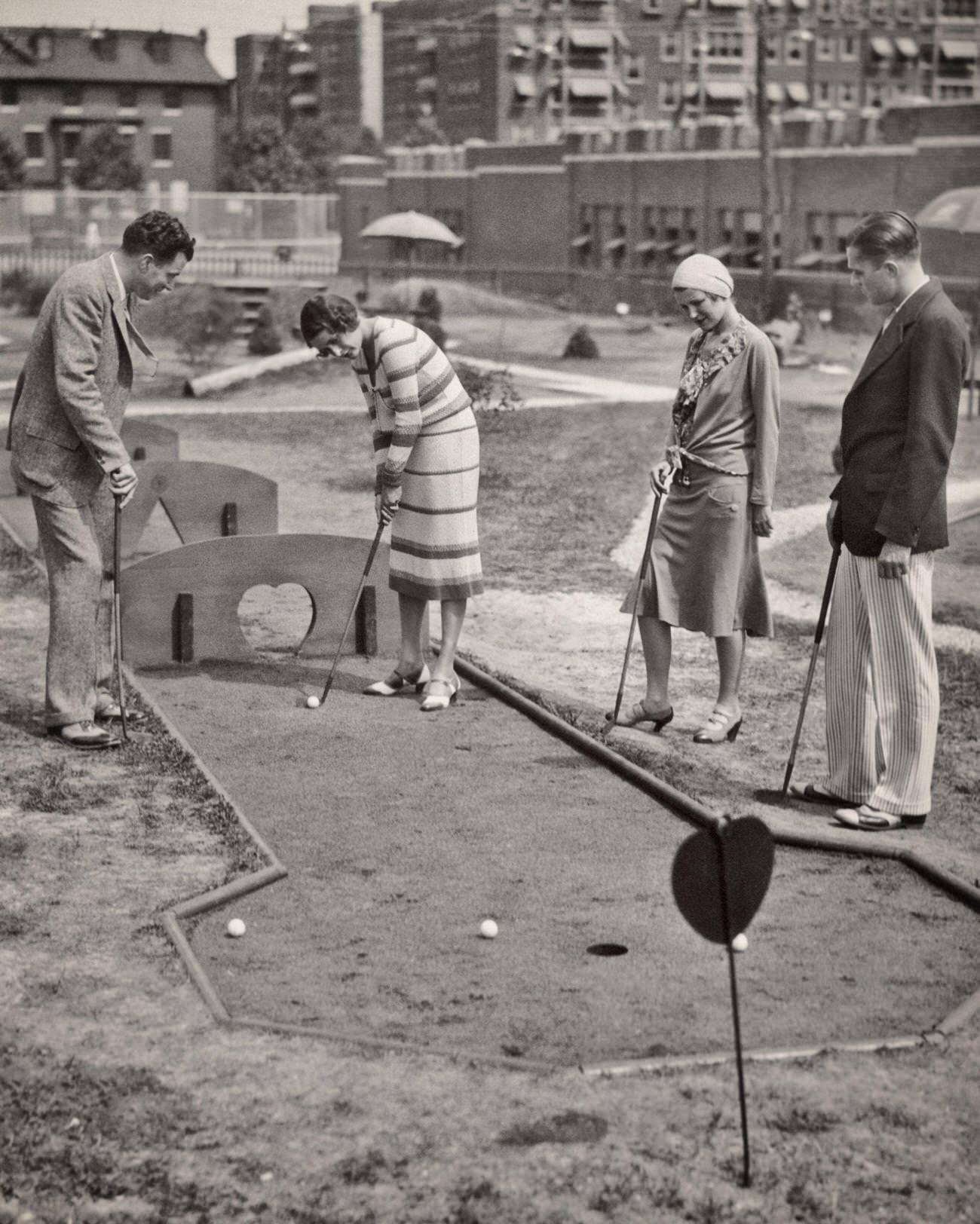
On a compact miniature golf lane in Philadelphia, two couples pause between putts, studying the next gentle roll toward a small cup set into the turf. The course’s low borders and simple wooden obstacle create a playful challenge, while several balls scattered near the green hint at near-misses and friendly rivalry. It’s an everyday leisure scene, yet the careful focus on the putters and the shared attention around the hole makes the moment feel quietly suspenseful.
Fashion anchors the photo in the 1920s–1930s: tailored suits, striped trousers, heeled shoes, and knit dresses that move easily from street to sport. One woman leans into her stance with practiced concentration, while another stands back with club in hand, watching with a half-smile that suggests conversation just outside the frame. Miniature golf was a modern pastime in these decades—an accessible, sociable alternative to the full course—and images like this show how couples turned recreation into an afternoon ritual.
Behind the players, the city rises in layered rooftops and apartment blocks, reminding us that this game unfolded within an urban landscape rather than a country club idyll. The contrast between the tidy lane and the busy skyline captures a Philadelphia of growing density, where pockets of green offered brief escapes from the street. For readers interested in early 20th-century sports history, women’s leisure, and Philadelphia photography, this snapshot is a charming window into how fun, competition, and modern city life met on the miniature golf course.