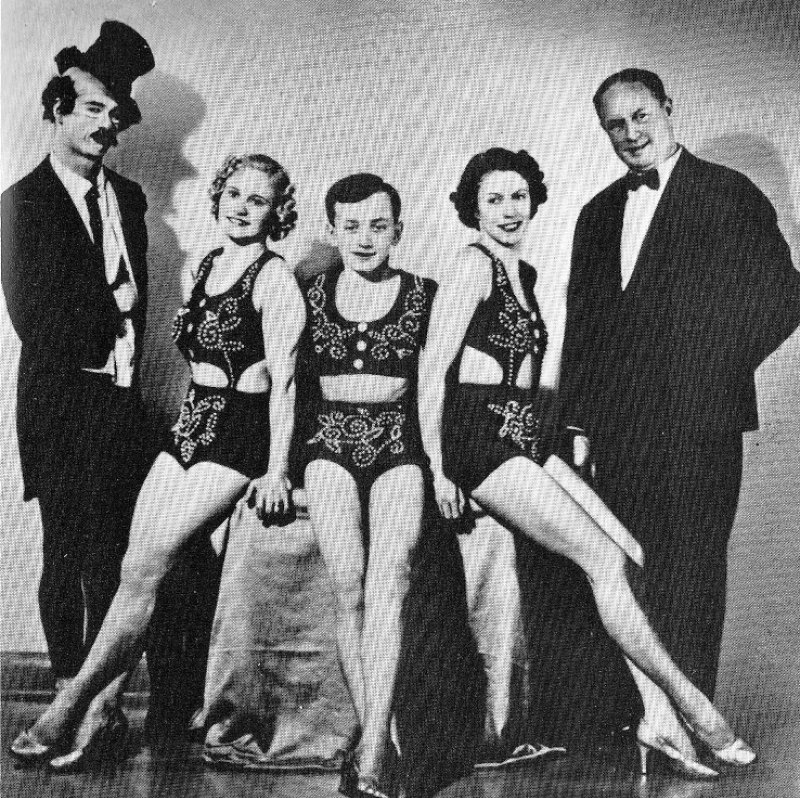
Under the bright studio lights, the Kremos appear poised between family portrait and stage publicity: three performers in matching embroidered leotards stand center, flanked by two men in formal eveningwear. The contrast is striking—sleek tuxedos and bow ties on the edges, glittering costume details and bare legs in the middle—suggesting the practiced duality of show business, where athletic discipline and polished presentation worked hand in hand.
Costuming does a lot of the storytelling here, hinting at the era’s taste for symmetrical group acts and coordinated “family troupe” branding. The central figure’s stance feels grounded and compact, while the two women angle outward with long, showy lines, creating a balanced composition that reads like a poster for an acrobatic turn. Even without seeing the routine itself, the photograph evokes the world of traveling variety entertainment, when acrobatics, comedy, and elegant stagecraft could share the same bill.
For readers searching the history of Swiss performers and the evolution of circus and vaudeville-style acrobatics, this image offers a vivid entry point into the Kremos’ legacy across two generations in the late 19th and early 20th centuries. It’s a reminder that endurance, choreography, and family labor often sat behind the glamour—hours of training distilled into a single confident pose for the camera. Look closely and the photo becomes more than a keepsake: it’s a curated piece of performance history, meant to sell an act and preserve a name.