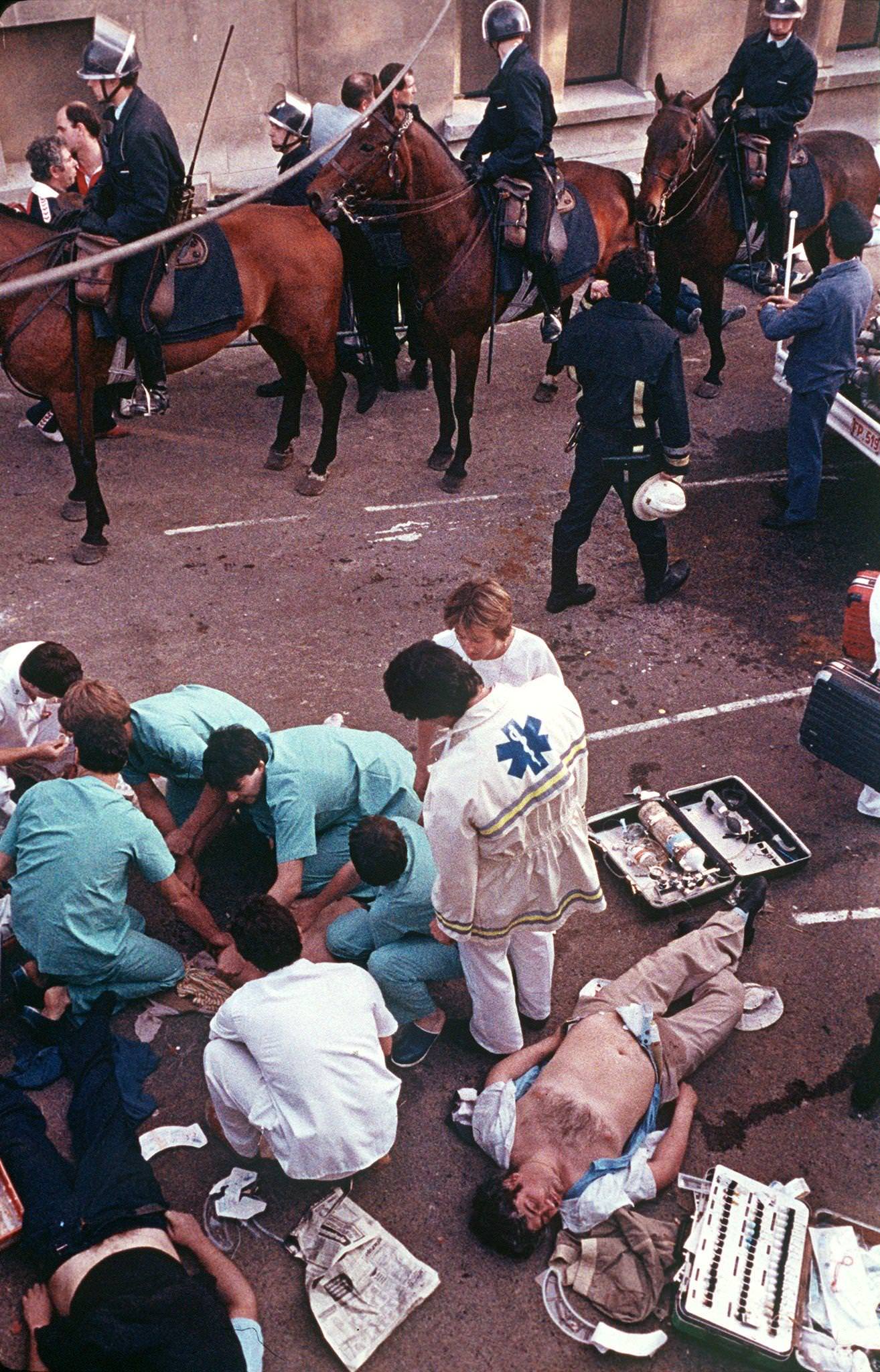
Chaos and urgency spill into the open air outside Heysel Stadium in 1985, where medical staff crouch over the injured on the pavement while police on horseback hold the line nearby. A scattered trail of newspapers, discarded clothing, and emergency equipment frames the scene, turning an ordinary roadway into a makeshift triage area. The tension between rescue and control is palpable, a stark reminder that disaster management often unfolds in real time, with limited space and seconds that matter.
The European Cup Final is remembered not only for what happened on the pitch, but for the crowd tragedy that claimed 39 lives and shocked football fans across Europe. In this photograph, the focus rests on the human cost—first responders and bystanders working shoulder to shoulder, improvising care amid confusion. It’s an unvarnished document of the Heysel Stadium disaster, capturing the reality behind the headlines and the heavy silence that follows mass panic.
For historians of sport and public safety, images like this help explain why Heysel became a turning point in stadium security, policing, and emergency planning. The posture of the rescuers, the presence of mounted officers, and the improvised medical setup together illustrate how quickly a celebratory event can become a crisis scene. As a piece of football history, it preserves the memory of those lost and the hard lessons that reshaped European football in the years that followed.