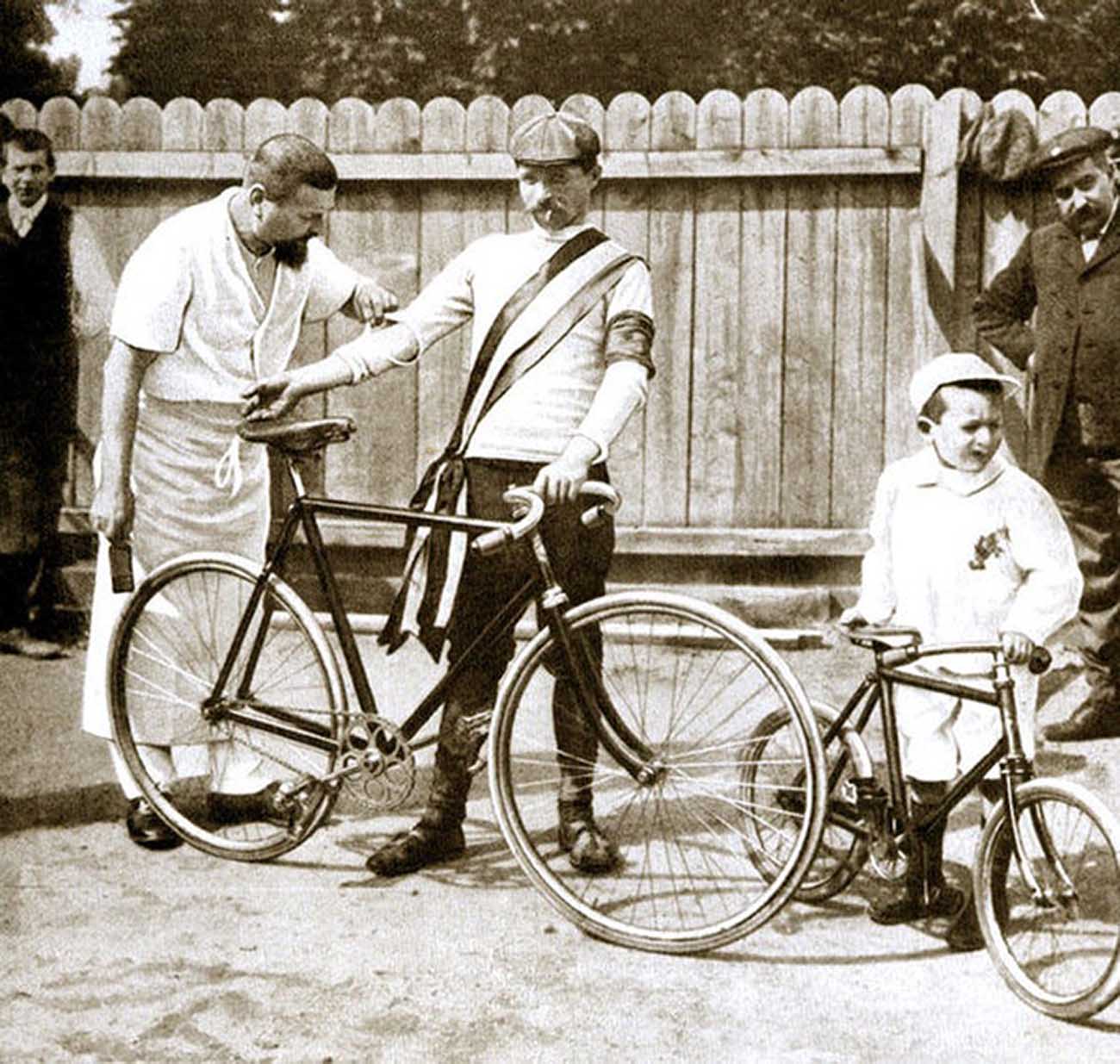
Maurice Garin stands with the calm assurance of a champion, posed beside a sturdy road bicycle while an attendant adjusts his sleeve as if preparing him for inspection. A bold diagonal sash cuts across his jersey, and the close-fitting cap and practical shoes evoke the no-nonsense world of early competitive cycling. Behind him, a simple wooden fence and a small knot of onlookers frame the moment, turning a casual roadside scene into a portrait of victory.
Details in the bicycles themselves tell the story of an era when riders relied on strength, endurance, and mechanical simplicity. The thin tires, high frame triangle, and uncluttered handlebars suggest a machine built for long distances rather than comfort, a fitting symbol for the demands of the first Tour de France. Nearby, a child with a smaller bike adds a touch of everyday life, hinting at how this new sporting spectacle captured imaginations beyond the racers.
For anyone exploring Tour de France history, this image helps bridge legend and reality by grounding Garin’s triumph in the textures of his time—workmanlike clothing, practical equipment, and a public eager to witness something new. It’s a reminder that the earliest Tours were as much about survival as speed, with winners celebrated not through glamour but through grit. Use this photograph as a window into cycling’s formative years, when champions were made on unforgiving roads and remembered in candid, human moments like this one.