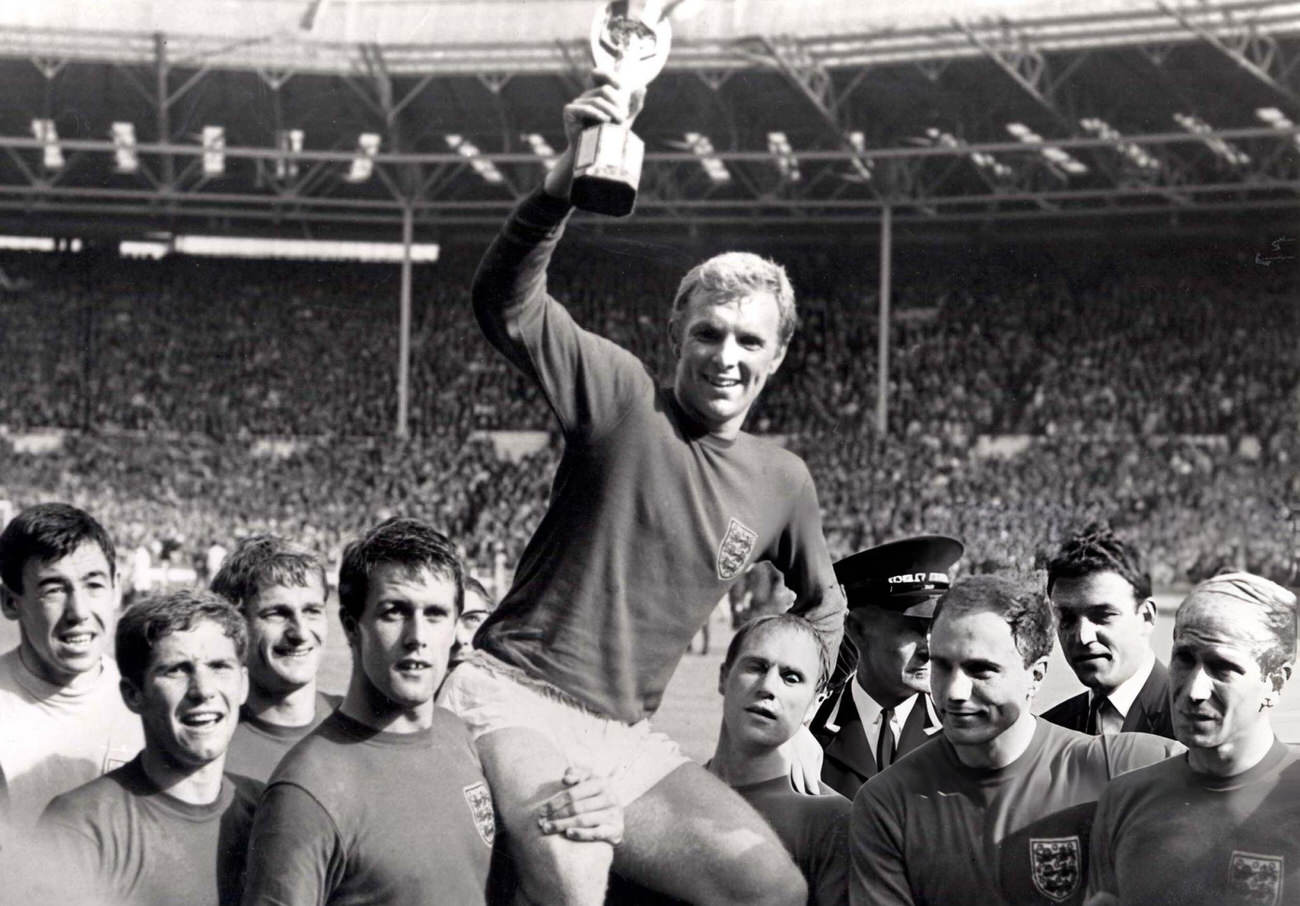
High above the sea of faces in a packed stadium, England captain Bobby Moore lifts the Jules Rimet World Cup trophy with an easy, unmistakable smile. Teammates crowd in close beneath him, their shirts marked with the national crest, while the terrace and roofline behind dissolve into a blur of celebration. The composition freezes a single, triumphant gesture—the cup held aloft like a beacon—at the very moment a team becomes legend.
Moore’s elevated position, carried shoulder-high, tells its own story of leadership and relief after the final whistle. Faces around him register different shades of victory: awe, fatigue, pride, and disbelief, all pressed together in the crush of a historic football crowd. Even the presence of officials at pitch level underscores how major sporting occasions are staged—part ceremony, part spontaneous eruption.
For fans searching “England 1966 World Cup trophy” or “Bobby Moore Jules Rimet,” this photograph remains one of football’s defining icons. It speaks to an era when the World Cup felt closer to the terraces, and when a single captain raising a small gold trophy could stand for a nation’s sporting peak. More than a sports image, it’s a piece of cultural memory—still echoed in highlights, murals, and the enduring mythology of 1966.