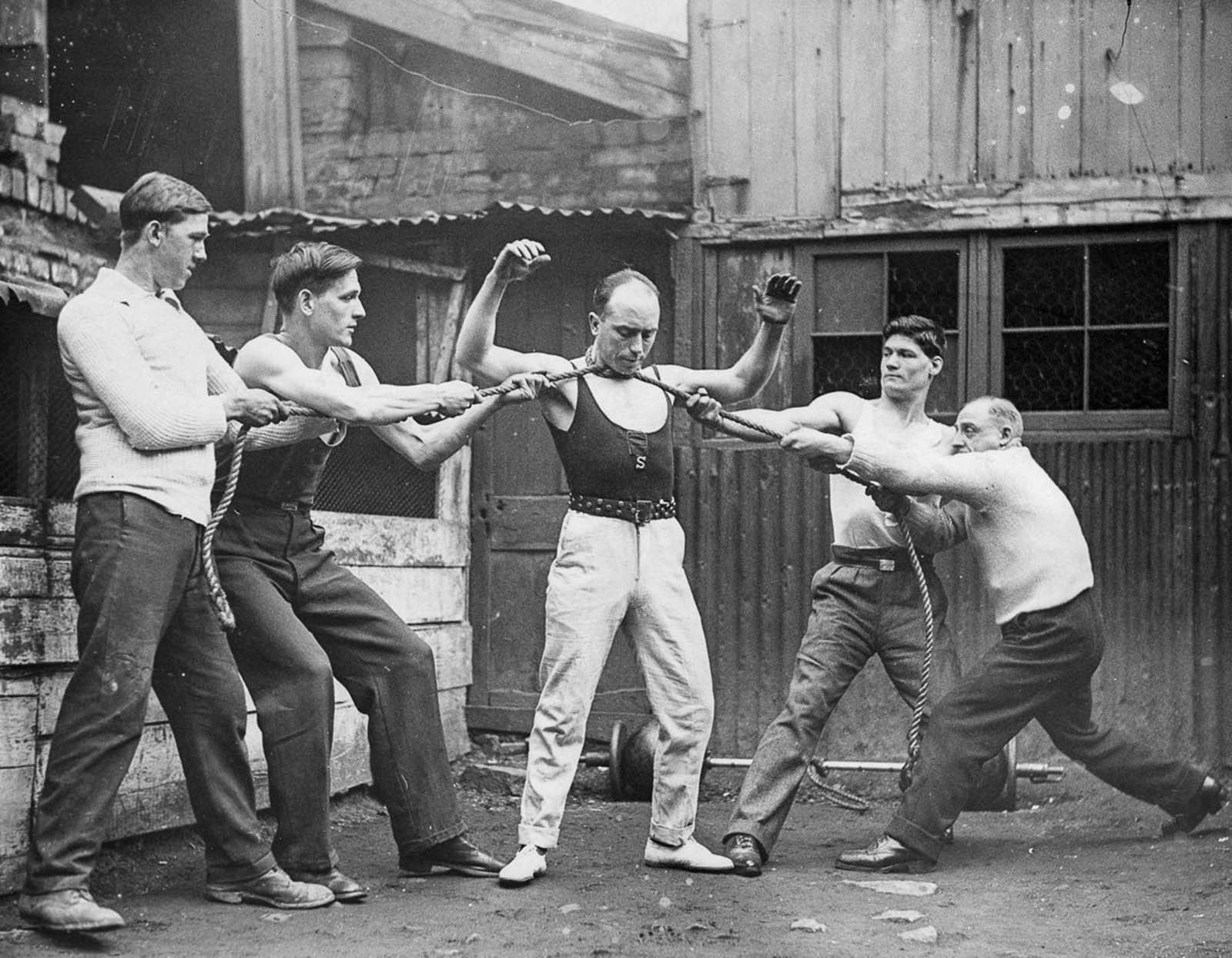
In 1932, Tom Joyce staged a blunt, unforgettable test of endurance that spoke to the era’s fascination with strongmen and public challenges. A thick rope is looped around his neck as he plants his feet and lifts his arms, turning his own body into the anchor point while onlookers become participants. The claim of being the strongest man in Bristol isn’t argued with words here; it’s performed in full view.
Around him, four men lean back and pull in opposing directions, their postures showing effort and skepticism in equal measure. Joyce stands at the center in athletic kit and a wide belt, his expression focused rather than theatrical, as if controlling breath and balance is as important as raw power. The setting—an everyday yard backed by rough timber and corrugated surfaces—adds a working-life realism that makes the stunt feel closer to street sport than polished stage show.
Photos like this sit at the crossroads of sport, entertainment, and local pride, when feats of strength were both a livelihood and a form of community spectacle. The rope, the stance, and the coordinated pull underline how early 20th-century strongman culture relied on simple props and convincing witnesses to sell the impossible. For anyone exploring Bristol history, vintage athletics, or the enduring mythology of the “strongest man,” this image offers a vivid, gritty slice of 1930s popular sport.