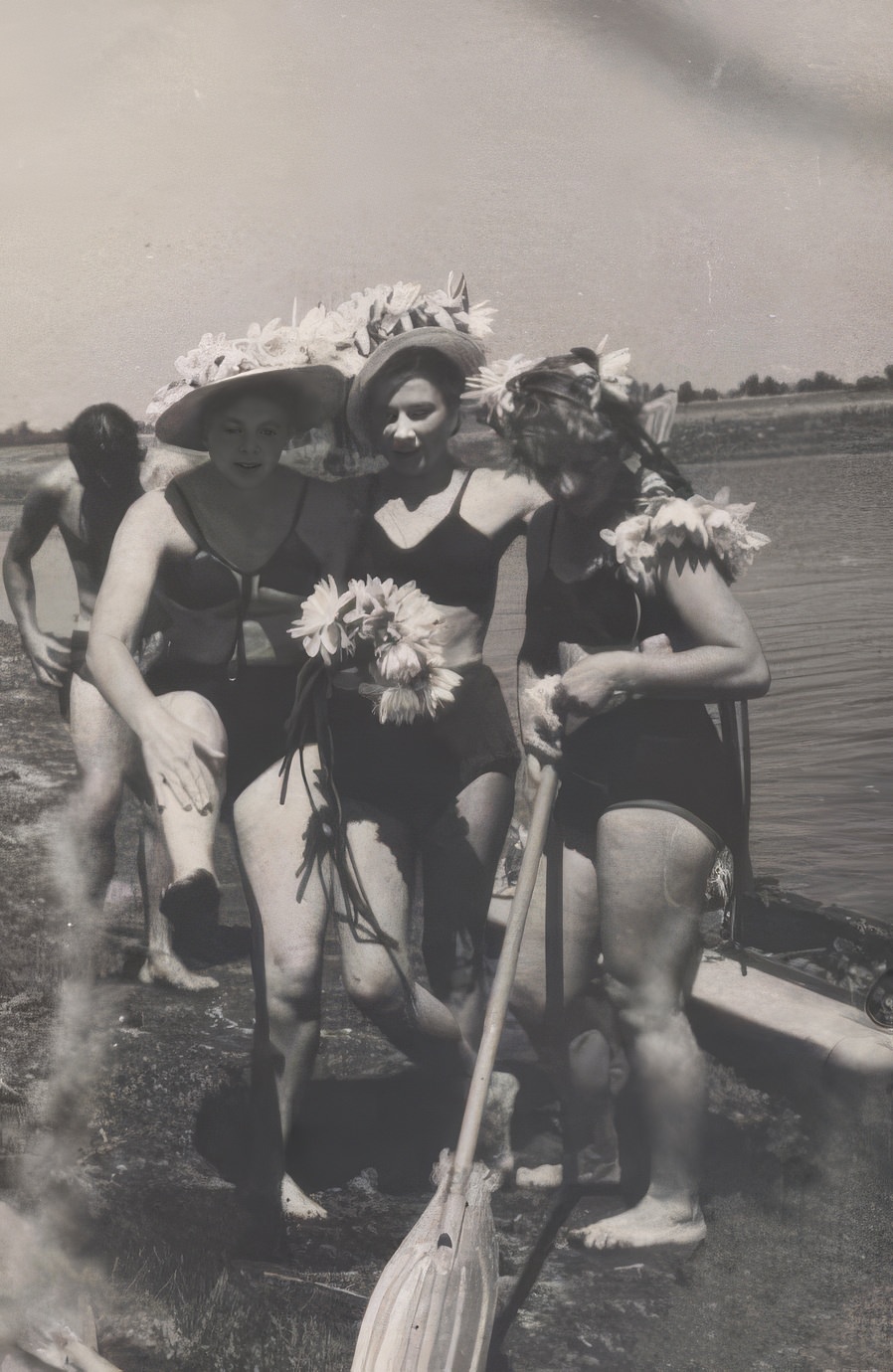
Sunlit water and a low, open horizon set the stage for three young sportswomen posing at the river’s edge, their athletic one-piece swimsuits contrasting with oversized floral hats and bouquets. A wooden paddle stands in the foreground like a prop from a regatta, hinting at rowing or paddling practice just finished, while another swimmer lingers behind them, half in motion. The mood is playful yet purposeful—strength on display, softened by the celebratory touch of flowers.
Images like this help explain why Soviet sport culture in the 1930s became such a potent symbol: the “new woman” was expected to be healthy, disciplined, and visibly capable. Here, toned legs and confident stances read as more than leisure; they echo the era’s enthusiasm for physical training, outdoor life, and organized sport as part of everyday modernity. Even without a specific captioned place or team name, the photo carries the unmistakable blend of fitness, camaraderie, and staged pride typical of the period.
For readers searching vintage Soviet photos, women’s athletics history, or 1930s sports imagery, this scene offers a rare, human-scale glimpse beyond parades and stadiums. The candid closeness—arms linked, faces turned toward one another—suggests friendship and shared effort after training on the water. “Strong Bodies, Strong Will” fits perfectly: the picture celebrates endurance and youth, while quietly revealing how sport could be both personal joy and public ideal.