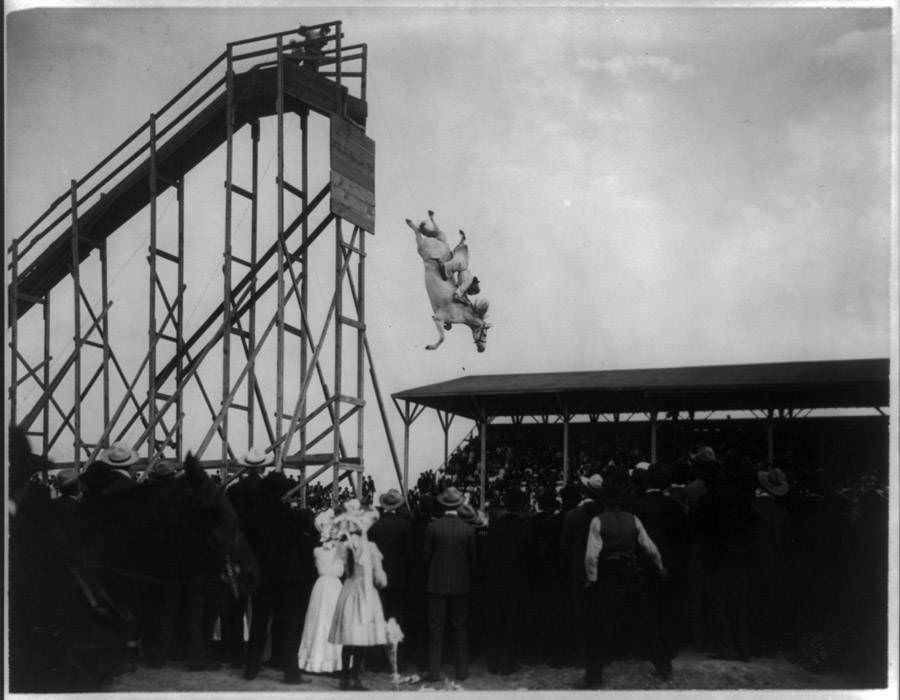
Mid-air, horse and rider hang for a heartbeat between the high wooden tower and the water below, while the grandstand and the ring-side crowd tilt their attention upward. The title identifies the performer as Eunice Padfield, and the setting as Pueblo, Colorado, on July 4, 1905—an Independence Day spectacle built around suspense, height, and sheer nerve. Even in a single frame, the stunt’s choreography is unmistakable: the steep ramp, the open sky, and the gathered onlookers packed shoulder to shoulder for a clear view.
Along the foreground, hats and dark coats form a dense border, with a few lighter dresses standing out near the center as people crane for a better angle. The tower’s latticework looks improvised yet imposing, its sharp geometry emphasizing how far up the dive begins and how little margin for error exists. That contrast—rigid timbers against the falling body—helps explain why horse diving shows were marketed as the most dangerous of attractions, drawing crowds with the promise of witnessing something almost unimaginable.
Beyond the shock value, the photograph offers a window into early 20th-century American entertainment, when fairs and holiday events mixed sport, showmanship, and modern publicity. Pueblo’s July 4 audience appears ready for pageantry and thrill in equal measure, turning a risky performance into a communal moment of awe and anxiety. For readers searching historic Pueblo Colorado photos, Independence Day celebrations, or the history of horse diving stunts, this scene preserves the instant when spectacle outweighed caution—and the crowd could not look away.