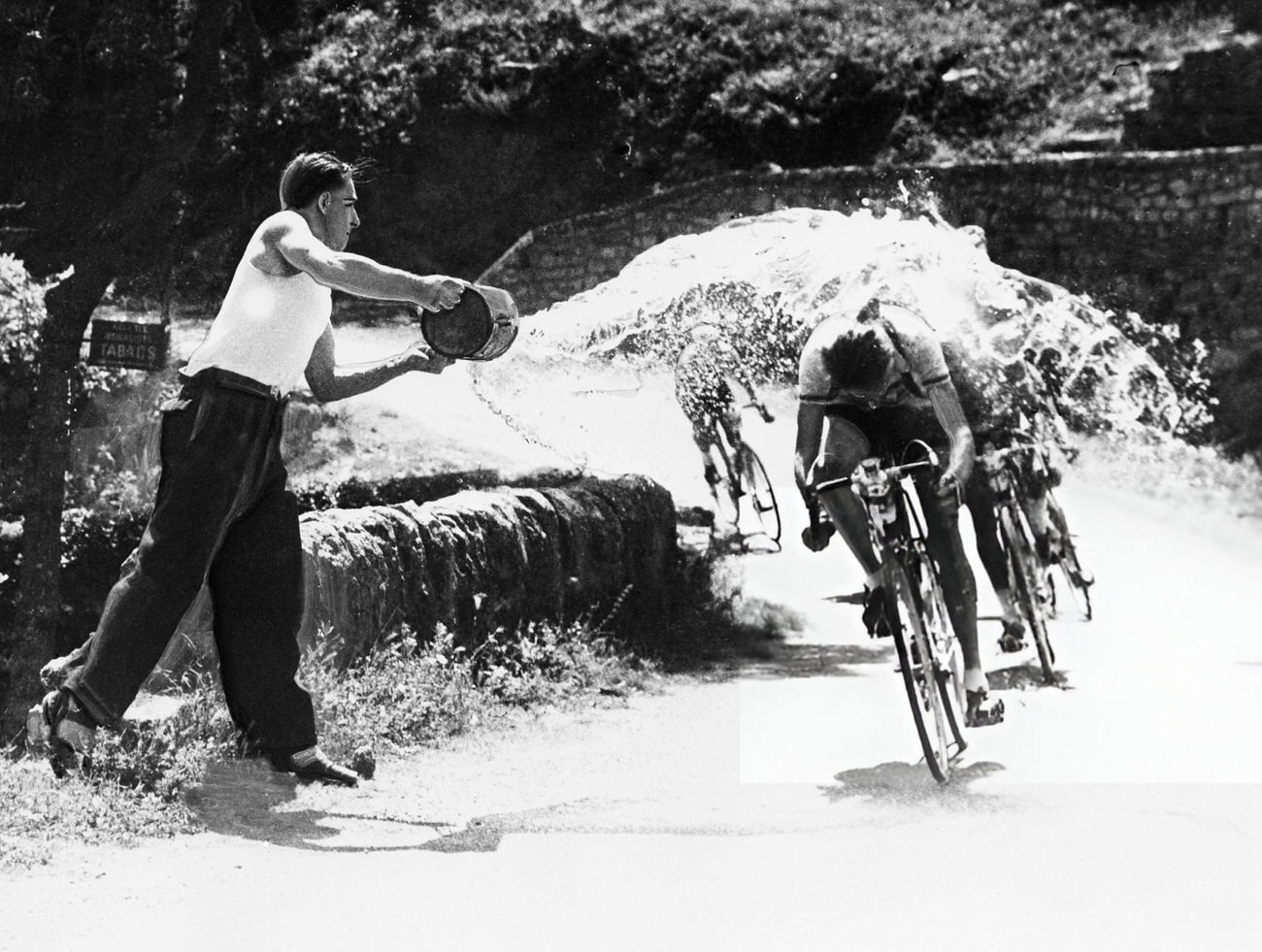
Along a sunlit roadside in the 1953 Tour de France, a spectator leans out with a metal bucket and sends a sweeping arc of water into the path of Dutch rider Jan Nolten. The moment is caught mid-splash, with droplets exploding across the frame as Nolten bends low over his handlebars, pushing through heat and effort while other cyclists follow in a tight line behind him. It’s a striking glimpse of endurance cycling when the road itself—and the people beside it—could decide whether a rider found relief or suffered on.
What makes the scene so vivid is its improvisation: no soigneurs at arm’s length, no neat handoff of a bottle, just a quick, generous drenching from the crowd. The rider’s posture suggests fatigue and focus, yet the gesture from the roadside feels intimate, almost domestic, as if the Tour has briefly merged with everyday life. Even the rough stone wall and trees in the background emphasize how close this grand race could run to ordinary places and ordinary hands.
For fans of cycling history, photos like this help explain why the Tour de France has long been more than a sporting event—it’s also a traveling encounter between athletes and the public. The image underlines the physical realities of mid-century racing: oppressive summer conditions, minimal comfort, and a reliance on teamwork that sometimes extended beyond the team car to strangers cheering on the climb. As a historical sports photograph, it preserves a fleeting act of kindness that still feels essential to the legend of the Tour.