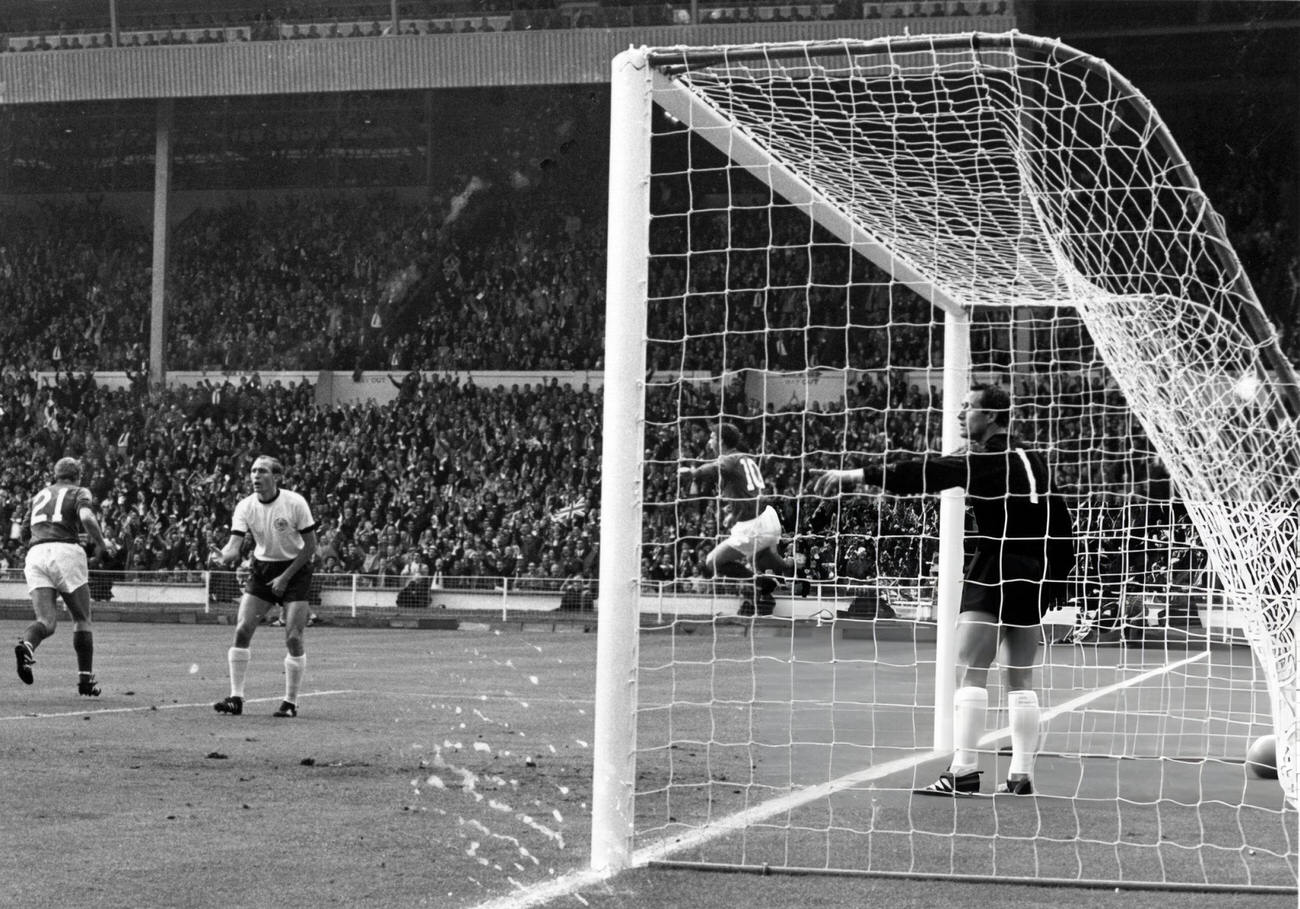
Near the goalmouth, the netting fills the foreground like a frame within a frame, and the ball has already done its work. Geoff Hurst is caught mid-leap in celebration, turning away as the crowd behind him surges into a blur of raised arms and excitement. It’s a split second from the 1966 World Cup Final that distills football into pure motion—strike, reaction, and release.
Across the penalty area, the goalkeeper stands inside the six-yard box with arms spread, a posture that reads as disbelief as much as it does readiness. Confetti and scraps of paper scatter over the turf, hinting at a stadium atmosphere that feels tightly packed and electrically loud even in monochrome. The opposing players linger in the background, while England’s forward momentum is embodied in Hurst’s airborne joy after the match’s opening breakthrough.
Moments like this explain why the 1966 World Cup remains central to England’s sporting memory: one goal shifts the emotional weather of a final, and the photograph preserves that swing forever. The composition—goalposts, net, and a sea of spectators—anchors the scene in the traditions of mid-century football photography, where drama is captured without embellishment. For anyone searching for classic World Cup history, England’s 1966 triumph, or iconic Geoff Hurst imagery, this is a vivid reminder of how quickly a single finish can become legend.