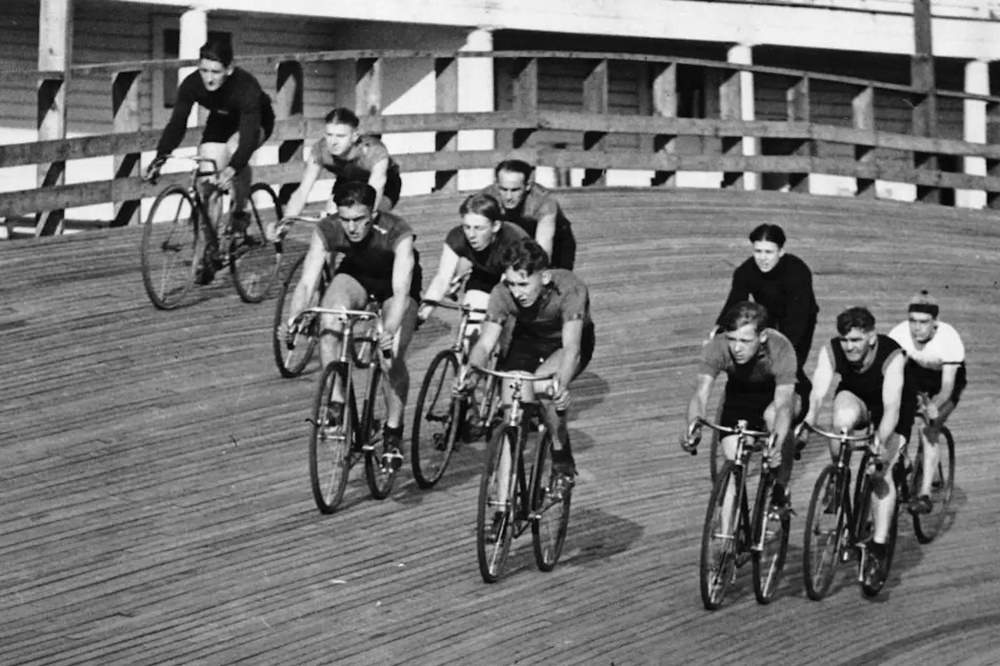
Lean, intent faces and tight-packed wheels sweep along the steep wooden boards of the Scarborough Beach Velodrome in 1926, freezing a moment of Toronto cycling history in mid-curve. The riders cluster in a compact group, each man holding a steady line as the track banking lifts them toward the rail. Even without sound, the scene suggests speed—spoked rims blurring, shoulders low, and handlebars gripped for control.
Details on the surface tell their own story: long planks laid in neat rows, a tall guardrail, and a simple structure rising behind the track that hints at a busy recreational complex. The cyclists’ sleeveless jerseys and close-fitting caps speak to an era when competitive sport relied more on grit and training than on modern materials. It’s an image that captures the craft of track racing—drafting, positioning, and nerve—played out on a demanding, unforgiving oval.
For anyone searching vintage photos of cycling in Toronto, this Scarborough Beach Velodrome photograph offers a vivid look at how popular and organized the sport had become by the 1920s. It connects beachside leisure culture with serious athletic competition, showing a community built around weekend events and local racers. As a piece of sports history, it reminds us that the city’s cycling roots were literally hammered into wood, lap after lap.