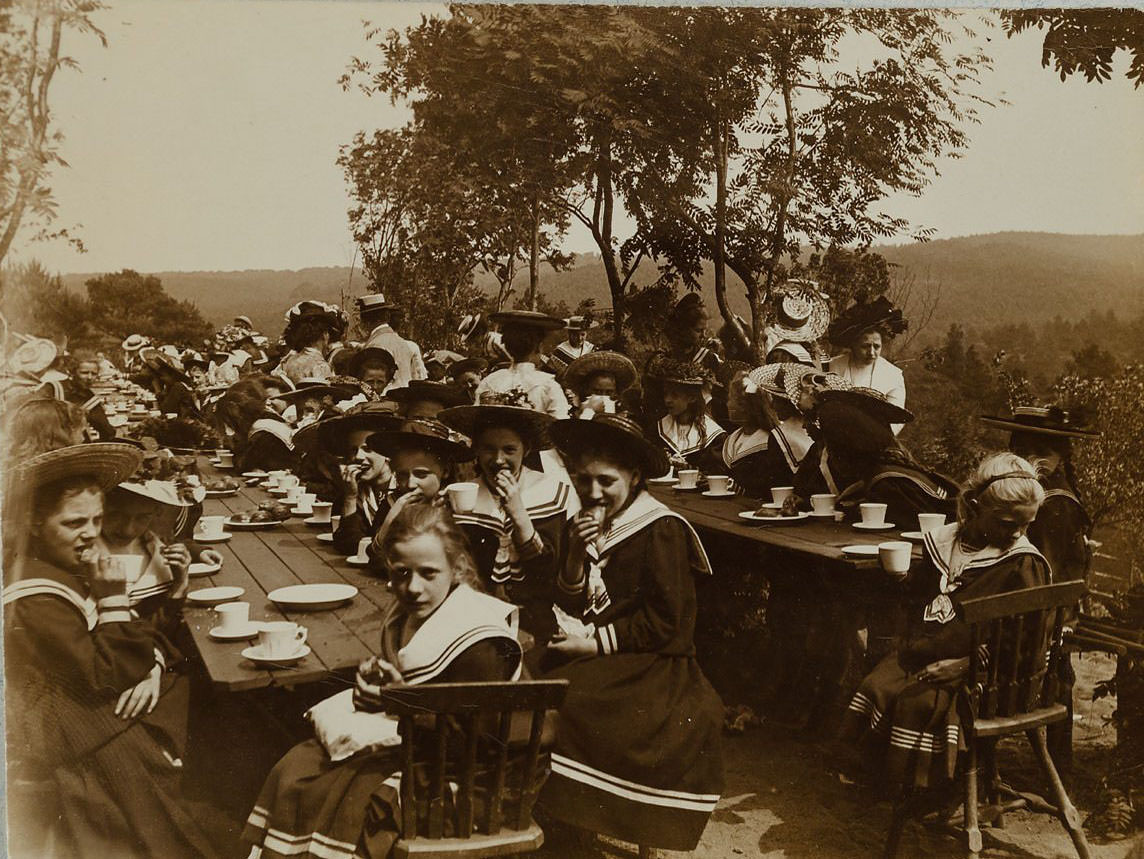
Under the shade of trees and against a soft, hilly horizon, a large gathering of women and girls sits shoulder to shoulder at long outdoor tables, cups and plates set out as if for a communal tea. Wide-brimmed hats, sailor-collar dresses, and careful grooming hint at an organized occasion rather than a casual picnic, while the relaxed faces suggest a welcome pause in the day’s program. The scene feels both intimate and public—part social outing, part community display—capturing the textures of everyday leisure in early-1900s Germany.
The post title points to Swedish gymnastics, a structured system of physical culture that emphasized posture, synchronized movement, and disciplined breathing—ideals that spread widely across Europe in the era’s schools and clubs. Photographs like this often preserve what formal records overlook: the social world around sport, where training could be paired with outings, refreshments, and conversation, making exercise a pathway to fellowship. Even without the action of drills frozen mid-step, the ordered seating and shared setting still echo the organization behind such women’s athletics.
For readers searching German history photos, women’s sports history, or Swedish gymnastics in the 1900s, this image offers a vivid reminder that physical culture was as much about community as it was about fitness. Clothing and tableware speak to norms of respectability, while the open-air setting suggests a deliberate embrace of fresh air and outdoor life. In Heinrich, Germany, the moment preserved here reads like the intermission of a larger event—an ordinary break that quietly reveals how modern sports and social life intertwined.