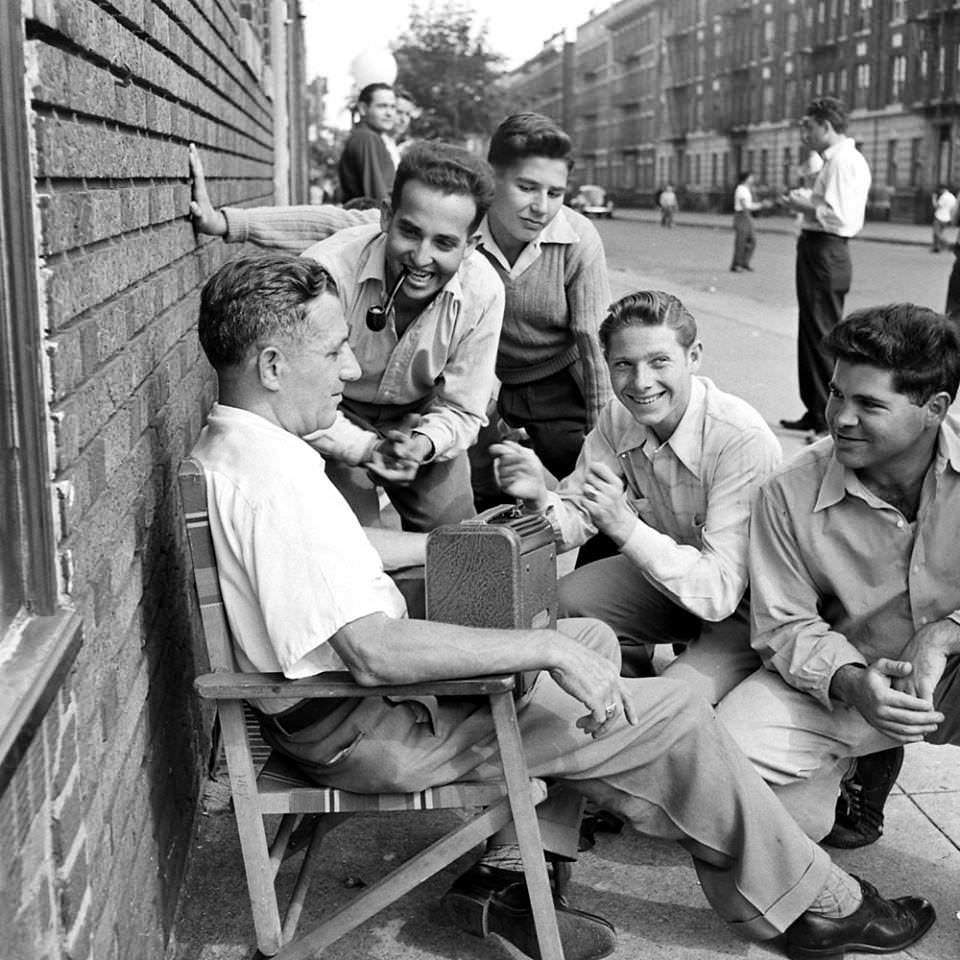
Brooklyn in 1946 feels close enough to touch here: a handful of young men crowd the sidewalk beside a brick wall, their attention fixed on a small portable radio perched like a prized possession. One lounges in a chair as if it were a front-row seat, while the others lean in with easy smiles, sleeves rolled, the street scene drifting behind them. Even without hearing the broadcast, you can almost sense the rise and fall of the announcer’s voice as the Dodgers and Giants trade momentum.
Before televisions took over living rooms, the radio turned baseball into a shared public ritual, pulling neighbors out of apartments and onto stoops, corners, and storefront edges. The device at the center of the group is both entertainment and gathering point, a reminder of how a pennant race could rearrange an afternoon’s plans. In a city defined by neighborhoods and loyalties, a Dodgers–Giants game didn’t just fill time—it shaped conversation, posture, and mood.
For readers browsing vintage sports photos and old New York baseball history, this moment captures the everyday side of fandom: not the stadium roar, but the intimate suspense of listening together. The casual camaraderie, the pipe, the sidewalk setting, and the tight circle around the radio all speak to postwar Brooklyn life and the way baseball knit people into community. It’s a snapshot of how the game traveled through the airwaves, turning an ordinary street into a temporary ballpark.