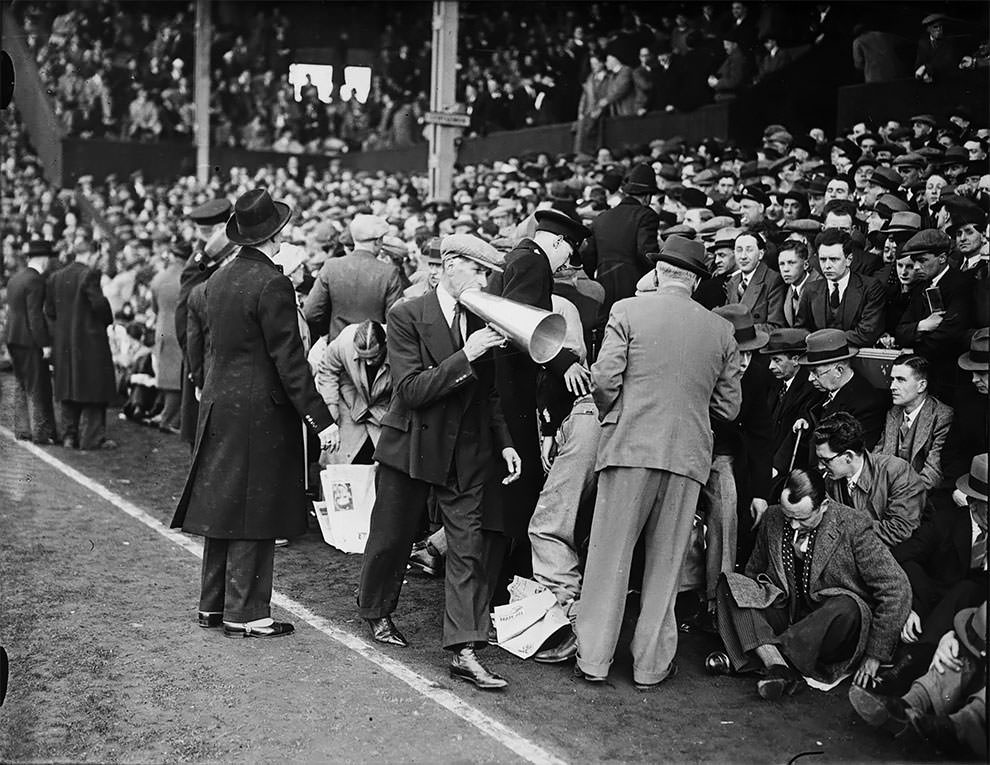
Crowds press so tightly against the painted touch line that the pitch seems to shrink before the match has even begun, turning the edge of play into a packed terrace at ground level. In the foreground an official raises a cone-shaped loudhailer, a practical tool for order and audibility in an era before modern stadium sound systems. Hats, overcoats, and anxious, expectant faces fill the frame, capturing the restless energy that surrounded big FA Cup afternoons in pre-war Britain.
At Brentford in Middlesex, on 5th March 1938, the sixth round tie between Brentford and Preston North End drew supporters close enough to feel like part of the contest. The photograph reveals how football crowds once flowed into every available space, with spectators sitting and standing right on the boundary, leaving only a narrow corridor for players, linesmen, and the ball. The scene also hints at the growing need for crowd management as the Cup’s prestige and matchday attendance pushed older ground layouts to their limits.
What lingers is the negotiation between authority and enthusiasm: policemen and officials coaxing, guiding, and urging fans back, while the crowd watches, waits, and resettles inch by inch. For readers searching for vintage football culture, 1930s FA Cup history, or Brentford’s matchday past, this image offers an unusually intimate look at how communal and chaotic the game could be. It’s a reminder that the spectacle wasn’t only on the pitch—the drama of the touchline began long before the first whistle.