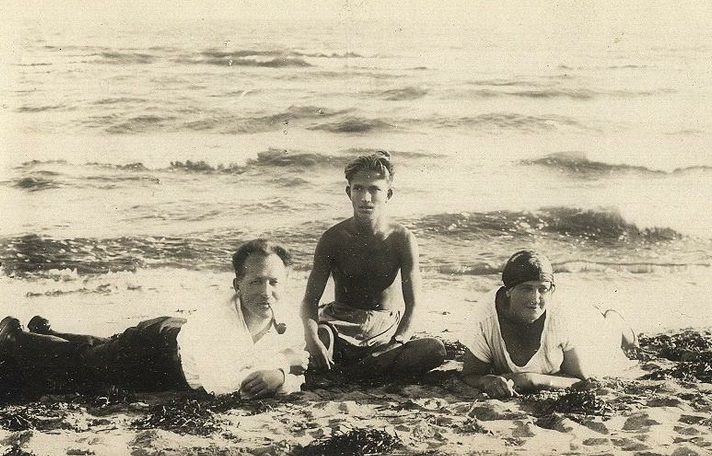
Salt air and surf set the stage for a candid seaside moment: three young people resting on the sand while low waves roll in behind them. The central figure sits upright in a simple athletic outfit, flanked by companions lounging closer to the ground, their relaxed postures suggesting a pause between swims or drills. Even without stadiums or banners, the shoreline becomes an informal training ground where bodies, balance, and endurance are quietly on display.
In the 1930s Soviet imagination, sport was more than leisure—it was a public language of discipline, health, and modernity, and photographs like this helped shape that ideal. The practical clothing, sunlit expressions, and straightforward composition speak to a culture that celebrated physical readiness as a virtue. Rather than a posed spectacle, the scene feels like everyday physical culture, the kind that made athleticism seem attainable and normal.
For readers exploring vintage Soviet sports photos, this image offers a softer counterpoint to parade formations and gymnastic pageantry: strength shown through ease, companionship, and the open horizon. It fits naturally within the story of “Strong Bodies, Strong Will,” reminding us how propaganda-era ideals often traveled through ordinary settings—beaches, riversides, and summer outings—where youth learned to move with confidence. Look closely and you can sense how the era’s emphasis on fitness could blend with genuine moments of rest and camaraderie.