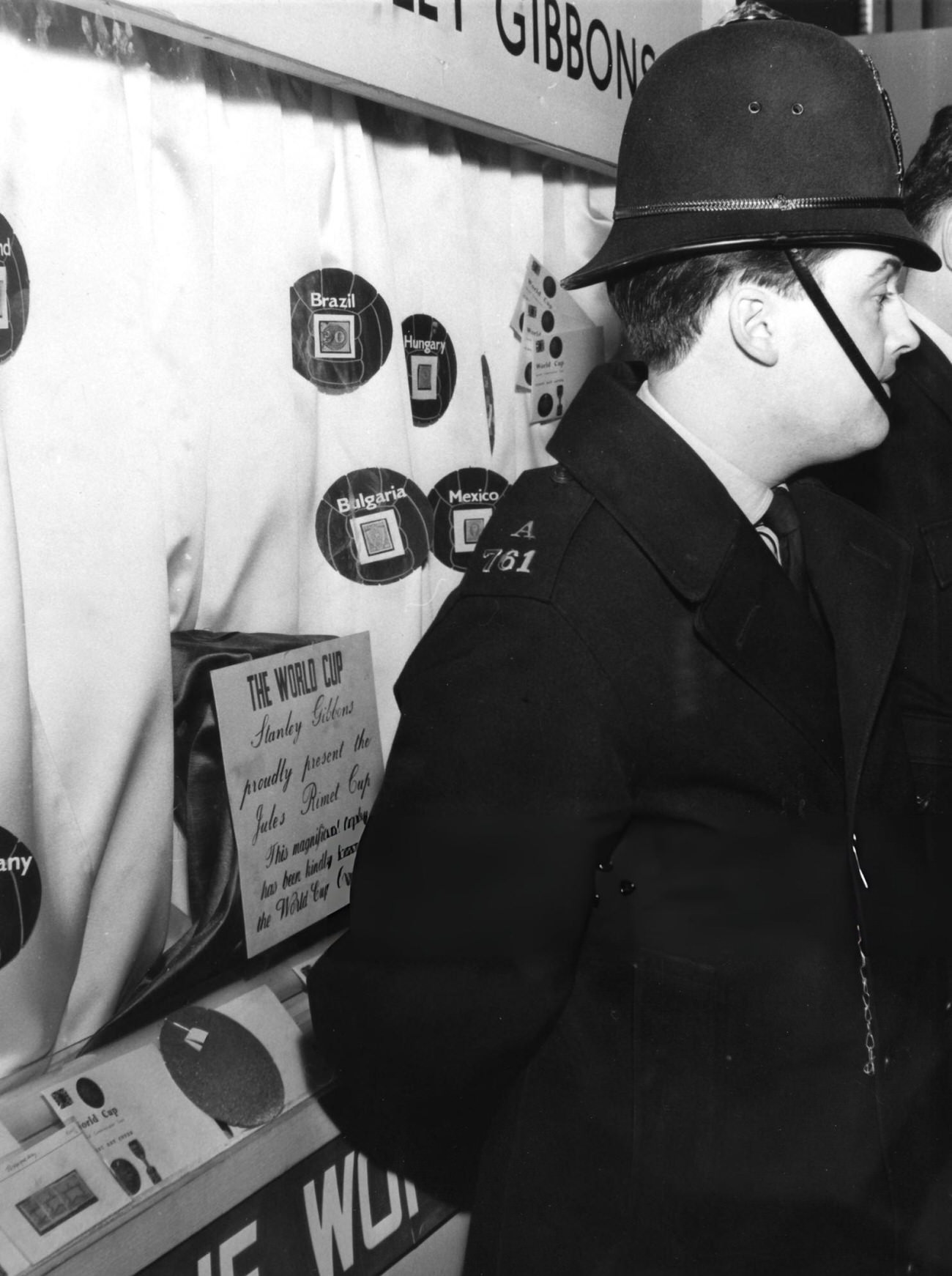
A helmeted policeman fills the foreground, his profile turned away as if listening for the next instruction, while behind him a curtained display case sits conspicuously without its prize. Posters and circular emblems for World Cup nations—Brazil, Hungary, Bulgaria, Mexico—cling to the backdrop, making the absence even louder. The scene feels part museum exhibit, part crime scene, captured at the uneasy moment when sport and security collide.
In 1966, the theft of the Jules Rimet trophy turned the World Cup into a headline beyond the pitch, and this photograph freezes that sudden shift in atmosphere. The protective stance of the officer and the tight framing around the case suggest a public space under scrutiny, where spectators and officials alike would have been drawn to the empty spot behind the glass. Even the surrounding promotional material—meant to celebrate international football—reads differently when placed beside a missing symbol of victory.
For anyone interested in football history, World Cup memorabilia, or notorious sports crimes, this image offers a stark reminder that iconic trophies carry vulnerabilities along with prestige. The modest signage and simple presentation hint at how differently major sporting artifacts were displayed and guarded compared with modern expectations. It’s a compelling visual footnote to the 1966 World Cup story, centered on the moment a global tournament briefly became an investigation.