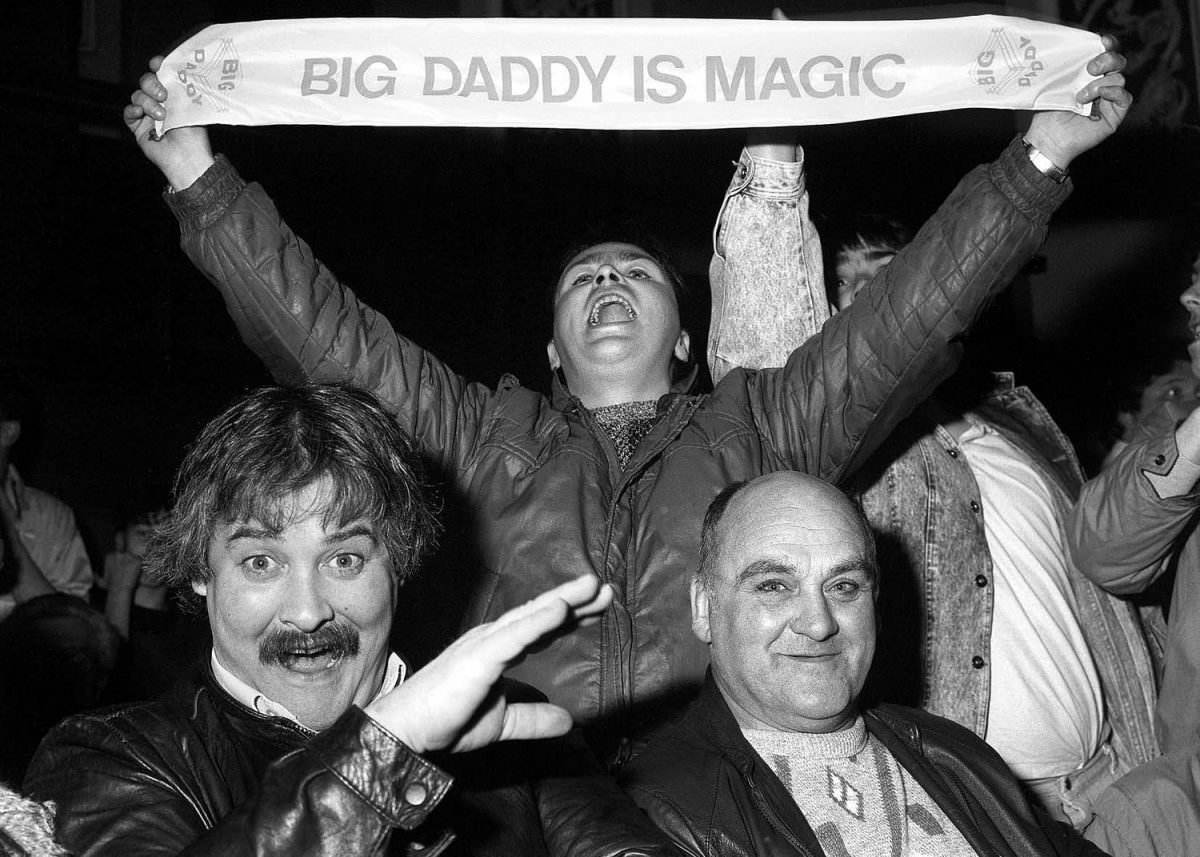
Arms raised high, a roaring supporter holds aloft a scarf that reads “BIG DADDY IS MAGIC,” and the message says everything about the pull of British wrestling in 1980s England. Around him, faces beam and shout in that packed-hall way—part sporting fervour, part shared night out—while heavy jackets and knitwear hint at the everyday crowds who made these bouts feel like a local ritual. The scene is less about a single move in the ring than the electricity of the audience that carried the spectacle.
What stands out is how personal the fandom looks: people leaning into the moment, smiling toward the camera, and celebrating a larger-than-life hero without a hint of irony. British professional wrestling of this era thrived on characters, catchphrases, and a family-friendly atmosphere that made stars into household names, whether you followed the sport live or through the wider pop culture surrounding it. Even without seeing the ring, you can almost hear the chants, the laughter, and the sudden hush before a big turn.
For readers searching the history of wrestling in England, this photograph offers a compact portrait of a “lost” combat-sports entertainment tradition that many remember with affection. It’s a reminder that the golden age of British wrestling wasn’t only built by promoters and performers, but by terraces of ordinary fans who brought scarves, voices, and community spirit. If you’re exploring 1980s British sports culture, the image captures why wrestling once felt like an event you joined, not just a show you watched.