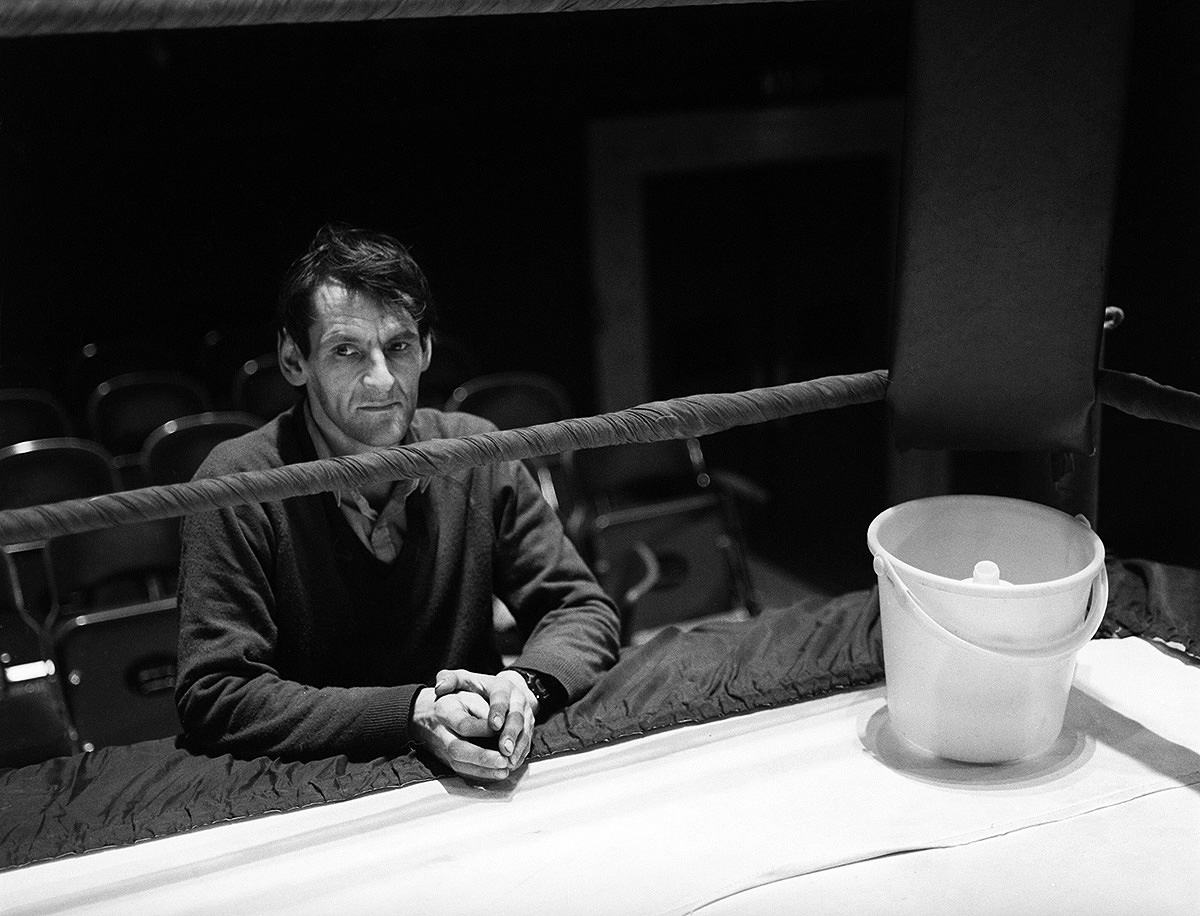
Leaning against the ring edge with his hands clasped, a lone figure waits in the hush of an indoor venue, the ropes cutting across the frame like a boundary between ordinary life and spectacle. Empty seats blur into the background, while a simple bucket and a padded corner hint at the practical, unglamorous routines that kept British wrestling shows moving from bout to bout. The mood feels more backstage than triumphant—an honest glimpse of the people who carried 1980s wrestling in England when the crowd noise faded.
British professional wrestling in this era lived in community halls and small arenas as much as on television, where local promotions and travelling cards built loyal followings. What made the scene memorable wasn’t only the clash of bodies, but the rituals around it: the set-up, the pauses, the waiting, and the quiet concentration before another round of combat sports entertainment. Photos like this help explain why many fans remember it with affection—close enough to touch, rough around the edges, and rooted in everyday British sport culture.
For anyone searching the story of wrestling in 1980s England, this image offers a grounded counterpoint to the larger myths of the ring. It suggests how “lost” can mean not forgotten, but simply moved out of the mainstream—kept alive in memories, scrapbooks, and the occasional photograph that preserves atmosphere as well as action. Look closely at the stillness and the worn practicality, and you can almost hear the next bell that never makes it into the frame.