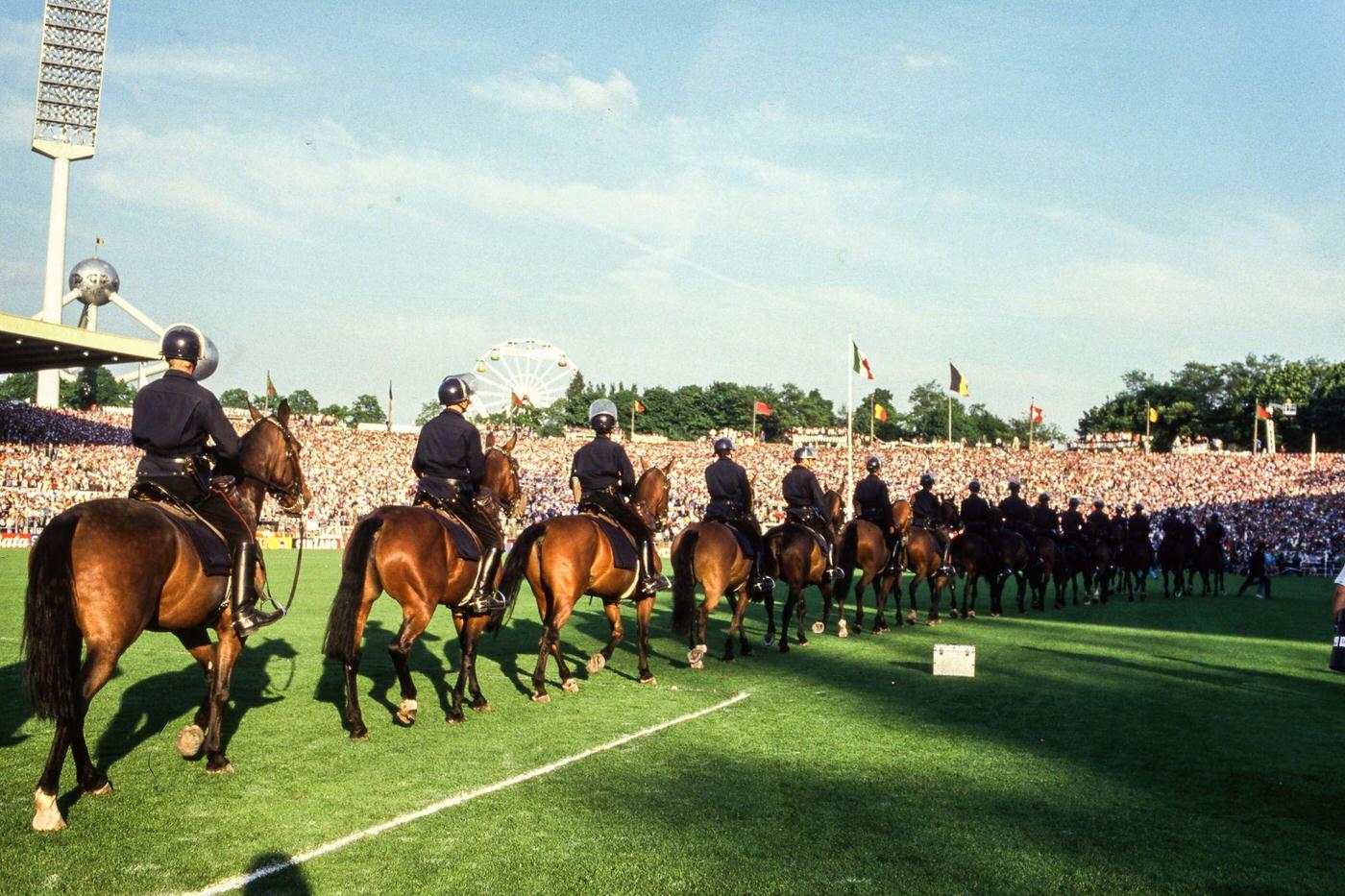
Mounted officers on horseback form a measured line along the touchline at Heysel Stadium, their dark uniforms and helmets cutting a stark silhouette against the bright pitch and a densely packed European Cup Final crowd. The scene feels almost ceremonial at first glance—horses stepping in rhythm, reins held tight—yet the posture of the patrol suggests vigilance rather than pageantry. In the background, stadium flags flutter above a sea of supporters, a reminder of how massive and emotionally charged football spectacles had become by the mid-1980s.
Few football venues are as burdened with meaning as Heysel in 1985, where the evening is forever associated with disaster and loss. The presence of mounted police on the pitch side speaks to an era when crowd management relied on visible force and physical barriers, even as many grounds struggled with outdated infrastructure and inadequate safety planning. That tension—celebration on the field, volatility in the stands—hangs over the photograph, turning a standard security measure into an unsettling historical detail.
As a historical sports image, this moment helps explain why the Heysel Stadium tragedy became a turning point in European football, reshaping discussions about stadium safety, policing, and supporter segregation. The wide, sunlit view captures the scale of attendance and the thin margin between order and chaos at major finals. For readers searching the European Cup Final at Heysel Stadium 1985, the mounted patrol along the sidelines stands as a visual shorthand for a match remembered less for play than for the consequences that followed.